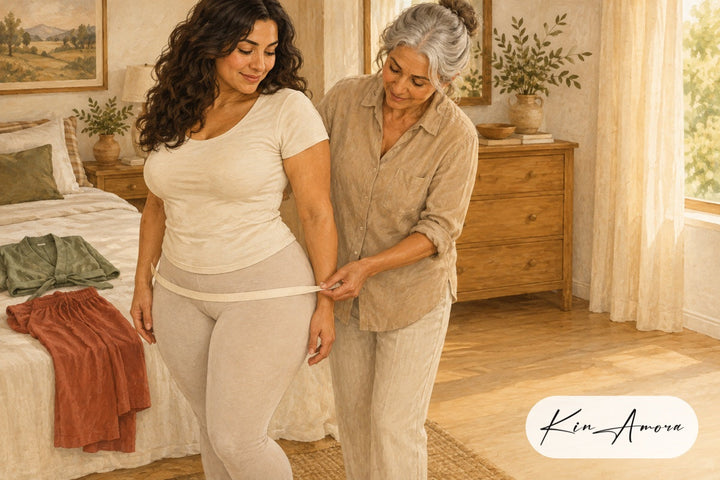
How do you take in pants that are too baggy in the legs and seat?
You take in pants that are too baggy in the legs and seat by sewing a new line inside the seam closest to the extra fabric, then tapering that line back into the original seam. Bagginess in the seat comes out at the center back seam and the top of the back inseam. Bagginess in the thigh comes out at the inseam. Bagginess down the whole leg comes out at both the inseam and the side seam.
The table matches 5 kinds of bagginess with the seam to take in.
| Where the pants are baggy | Seam to take in | What changes | Difficulty |
|---|---|---|---|
| Seat, below the waistband | Center back seam, tapering through the crotch curve | Seat width and back waist | Medium, the waistband opens at center back |
| Under the seat, at the top of the thigh | Back inseam near the crotch | Fabric that folds under the seat | Medium |
| Inner thigh | Inseam, tapering toward the knee | Thigh width | Easy |
| Whole leg, hip to hem | Inseam and side seam together | Leg width all the way down | Easy to medium, pockets can block the side seam |
| Waist only | Center back seam or both side seams | Waist size | Medium, the waistband has to be opened |
Split large reductions across several seams. NMSU Extension's guide C-227 removes a quarter of the total decrease from each of the 4 leg seam edges, the inseam and side seam on the front and the back. Spreading the change keeps the side seam on the side of the leg and the inseam on the inside, where they belong. A single seam pulled in too far twists the leg.
What do you need to take in pants?
To take in pants, you need 8 tools that most home sewing kits already hold.
- A seam ripper to open the waistband, belt loop or hem.
- Pins or sewing clips to hold the excess while you wear the pants.
- Tailor's chalk or a washable marker to draw the new line.
- A soft tape measure to even out both legs.
- A sewing machine, or a hand needle for short seams.
- Thread that matches the fabric's color and weight.
- An iron and a pressing cloth.
- An overlocker or a zigzag stitch to finish the raw edges.
A ruler or a French curve helps on the center back seam, where the new line has to follow the curve of the seat. A helper makes the pinning step faster, since the back seam is hard to pin on yourself.
How do you take in pants step by step?
To take in pants, pin the excess while wearing them, sew a tapered line inside the old seam and press it flat in 10 steps.
- Wash and dry the pants the way you always will, so any shrinkage happens before the alteration.
- Turn the pants inside out and put them on with the shoes you plan to wear.
- Pin out the excess along the seam that the table names, starting at the baggiest point.
- Pin the same amount on both legs, then take the pants off carefully.
- Mark the pin line with chalk, measure it on both legs and even out any difference.
- Draw the new line so it tapers into the original seam over several inches, with no sharp angle.
- Baste along the new line with the longest stitch, then try the pants on again.
- Sit, squat and climb a step to test the fit, and adjust the chalk line until nothing pulls.
- Sew the final seam with a regular stitch, then trim the extra seam allowance to the width of the original.
- Finish the raw edges with an overlocker or a zigzag stitch and press the seam.
Step 6 decides whether the alteration shows. A taper that meets the old seam at an angle leaves a point that catches light on the outside of the leg.
Pressing finishes the job. NMSU Extension recommends pressing pant seams open with steam to keep them flat, with a strip of paper under the seam allowance so the edge does not mark the right side. Cotton-rayon pants need a gentler hand, because rayon presses best with a medium-hot iron and loses strength when wet, according to University of Georgia Extension.
How do you take in the seat of pants?
To take in the seat of pants, sew a new center back seam that curves in at the seat and tapers to nothing at the crotch. Open the waistband and belt loop at center back with the seam ripper first, since the new seam starts at the top edge. Draw the new line parallel to the old curve through the seat, then let it blend into the original seam before the crotch point, so the crotch depth stays the same.
Fabric that folds under the seat needs a second change. Take in the back inseam for the top few inches below the crotch, tapering to the original seam by mid-thigh. Close the waistband over the new seam and restitch the belt loop.
How do you take in the legs of pants?
To take in the legs of pants, sew new lines inside the inseam and the side seam, tapering both back toward the hem or carrying them straight down for a narrower leg. Each seam you take in removes twice its depth from the leg's circumference, since both layers move. A new line ½ inch inside the inseam and ½ inch inside the side seam therefore takes 2 inches off the leg.
Keep enough room to move. NMSU Extension's 2021 pants-fitting guide sets 1 to 2 inches of ease at the thigh and at least 2 to 4 inches at the hip for fitted pants. Measure the thigh of the pinned pants against your own thigh before sewing, and stop when the difference reaches that range.
How do you take in pants from the side seams?
To take in pants from the side seams, start the new line below the pocket opening and taper it into the original seam above. Side seam pockets sit in the top of the seam, so a new line through the pocket opening narrows the pocket and pulls it open. Below the pocket, the side seam takes in like any other seam.
Pants with pockets in the side seam and extra width at the hip are easier to take in at the center back and the inseam. Leave the side seam alone above the pocket bottom.
How do you take in pants at the waist?
To take in pants at the waist, take in the center back seam through the waistband, or take in both side seams by the same amount. NMSU Extension's guide removes a quarter of a waist reduction at each side seam on a pattern, which spreads the change evenly. On finished pants, the center back seam is the simpler choice, because only one seam and one belt loop have to be opened.
What changes when the pants have an elastic waist?
An elastic waist changes where the waist reduction goes, because the elastic sets the waist size, not the seams. Shortening the elastic inside the casing makes the waist smaller and leaves the seat and legs untouched. Taking in the seams of an elastic-waist pant narrows the casing too, and the guide to taking in an elastic waist explains how to keep the band's stretch.
Can you take in pants by hand?
Yes, you can take in pants by hand, using a backstitch along the new line, which holds like a machine straight stitch. Hand sewing suits short seams, such as the center back seam or a few inches of inseam. A full leg sewn by hand takes far longer, so a machine is the better tool for long seams.
How do tailors take in pants?
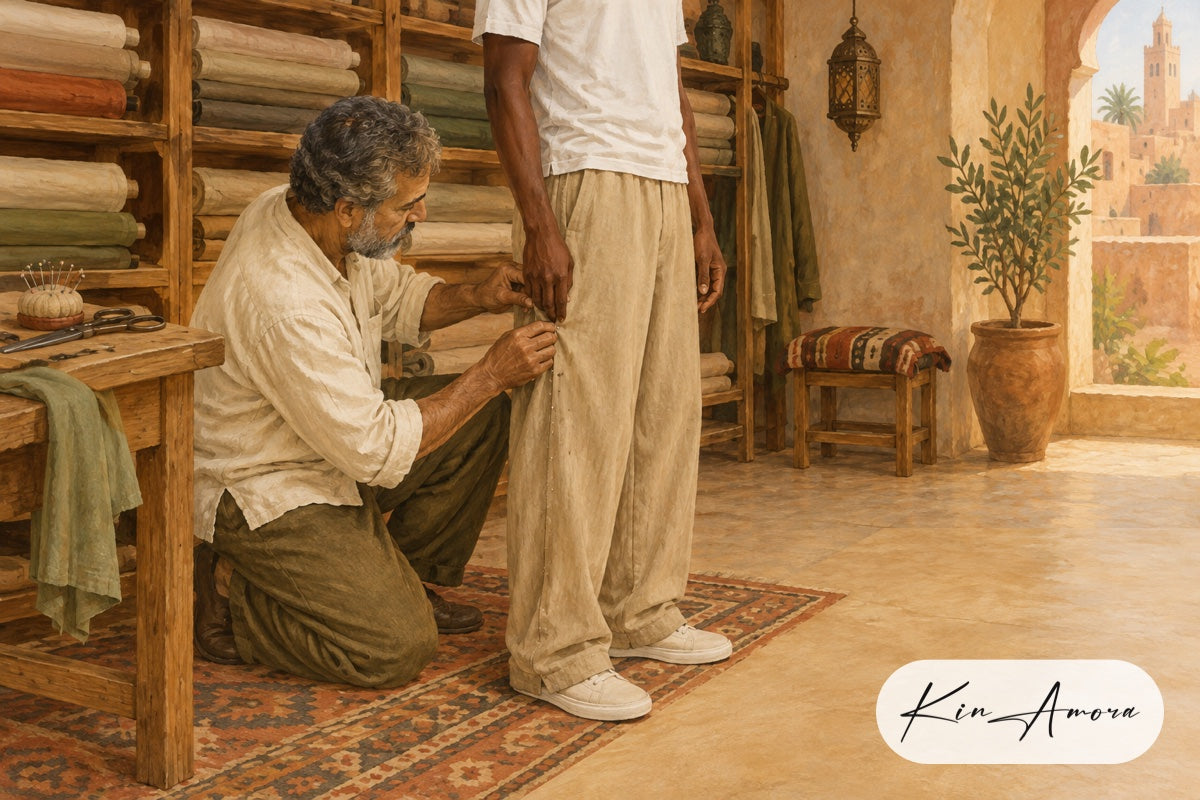
Tailors take in pants by fitting the pants on the body, pinning the excess at the seam closest to it and spreading large changes over several seams. A tailor marks the change with chalk on the inside, opens the waistband and belt loops where needed, and sews and presses the new seams. The best way to take in pants that are too big follows the same order, with fitting first, sewing second and pressing last.
Tailored trousers often need a tailor rather than a home machine. A lined trouser has a lining to take in with the shell, and a waistband with a split center back needs to be reshaped, not only resewn. Jeans with a double-stitched seam are harder to take in at that seam, so take them in at the plain seam instead.
When is taking in the waist the wrong fix for baggy pants?
Taking in the waist is the wrong fix when the bagginess sits in the seat, legs or crotch rather than at the waistband. A smaller waist pulls the top of the pants in and leaves the extra fabric below it, so the seat and legs still sag. The 4 cases below call for a different fix.
- The pants fit at the waist and sag in the seat, which calls for the center back seam and back inseam.
- The crotch hangs low, which comes from crotch depth and needs a tailor to shorten the rise from the waistband or reshape the crotch curve.
- The pants are more than about a size too big, so the pockets, rise and leg proportion stay too large after any take-in.
- The cut is meant to be loose, such as a harem, drop-crotch or wide-leg pant, where the extra room is the design.
Pants that fit comfortably at the waistline and fall smoothly over the hips and thighs, the standard NMSU Extension's guide C-227 sets, need no waist change at all. Elastic waist pants meet the same standard once the band rests at the smallest part of the waist, and the guide to elastic waist fit points shows where the band, rise and hem should land.
Should you take in harem or wide-leg pants?
No, you should not take in the legs of harem or wide-leg pants, because the extra width is the cut, not a fitting fault. Take in the waist or shorten the hem instead, and leave the leg width alone. A harem pant taken in at the seat loses the dropped seat that lets the wearer sit cross-legged.
How do you take in pants without sewing?
You take in pants without sewing with a belt, safety pins or a fold at the waistband, which hold for a day but not for the long term. A belt gathers extra waist width evenly, and a safety pin through a small tuck at each side seam narrows an elastic band. Leg and seat bagginess cannot be fixed without sewing, because no pin holds a new seam line along a whole leg.
How does taking in pants suit different wearers?
Taking in pants suits most wearers once the right seam is chosen. The notes below give one practical angle for each kind of wearer.
For petite wearers. Check the length before the width. A long leg pooling at the ankle looks baggy, and a hem alteration often fixes more than taking in the seams would.
For men. Men's dress pants often have a split waistband at center back, which makes the center back seam the usual place to take in the waist and seat. Casual pants with a one-piece waistband are easier to take in at the side seams below the pockets.
After a change in size. Pants that are one size too big take in well at the seams. Pants that are two or more sizes too big keep oversized pockets, rise and crotch depth, so a new pair in the right size gives a better line.
Taking in pants at Kin Amora, the pants collection
Kin Amora's pants are relaxed, elastic-waist cuts in a 60% cotton, 40% rayon blend, handmade by local artisans in Morocco, so the leg room is part of the design. Tailoring is available on request in the order notes. Each pant below has pockets and an elastic waistband or panel.
- Marrakesh Harem Pant ($145), a harem cut in One Size Fits Most.
- Womens Santorini Pant ($120), a tapered leg in Small to XL.
- Gypsy Flare Pant ($120), a wide leg in Small to XLarge.
- Stella Wide Leg ($165), a wide leg with a front panel and an elastic back, in Small, Medium and Large.
- Classic Capri (from $98), with a front yoke panel and a 3-button side opening, in One Size Fits Many or Plus.
Kin Amora's pants suit anyone who wants a relaxed leg and would rather ask for tailoring on request in the order notes than unpick a waistband at home. The same pants do not suit a buyer who wants a slim, zip-fly trouser cut close through the seat and thigh. Browse the Kin Amora pants collection and ask for tailoring on request in the order notes.