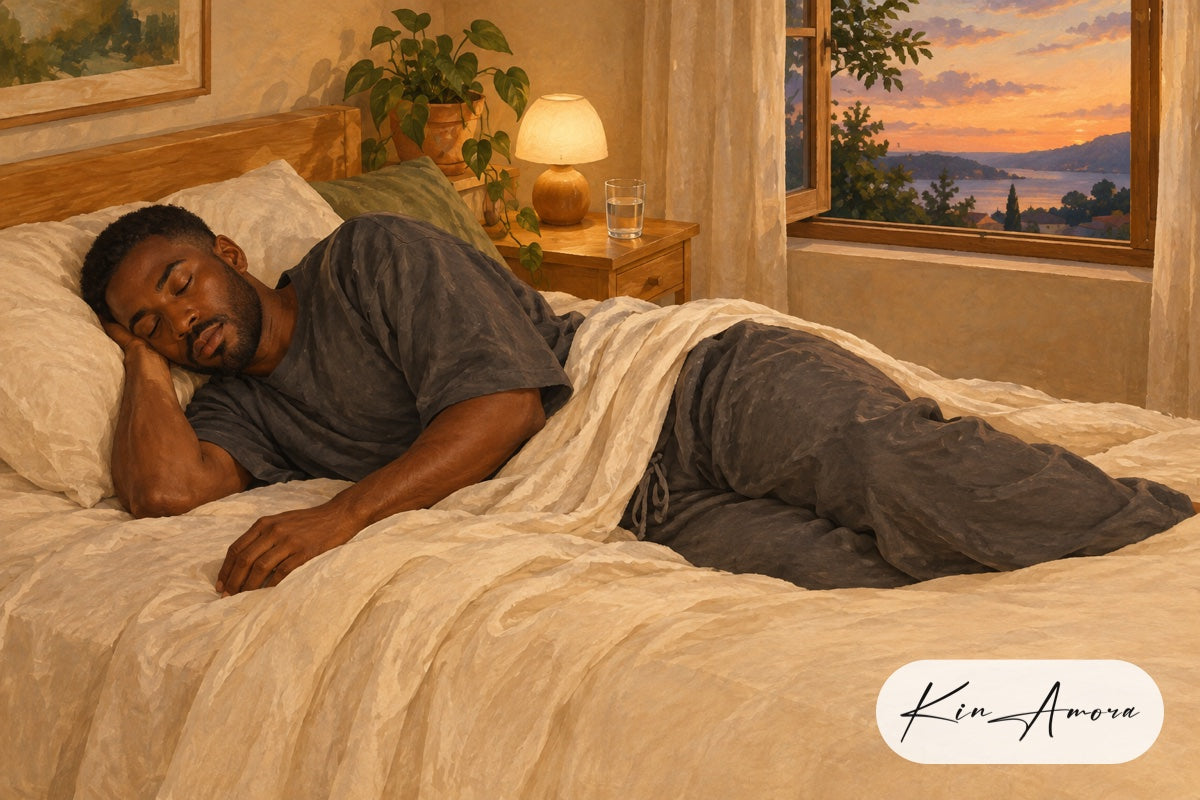

Can you sleep in loungewear?
Yes, you can sleep in loungewear when the pieces are loose, soft, clean and free of hardware. A loose cut lets you turn over without fabric twisting around the hips. A soft fabric such as cotton, rayon or a cotton-rayon blend sits gently on the skin. A clean set keeps the day's dust out of the bed, and a garment without zips, studs or buttons has nothing to press into you when you lie on your side.
Loungewear and pajamas share most of these traits, which is why the swap works. Both pull on with an elastic or drawstring waist, and both use soft fabrics. Loungewear adds a finish made to be seen, such as clean hems, side pockets and prints, and that finish doesn't change how a set feels in bed.
Is loungewear the same as sleepwear?
No, loungewear is not the same as sleepwear, because loungewear is made for waking hours at home and sleepwear is made for bed. Merriam-Webster treats sleepwear as another word for nightclothes, which it defines as "garments for wear in bed." The comparison of loungewear and pajama differences sets the two side by side across fabric, cut, finish and use.
Which loungewear pieces can you sleep in?
Loungewear pieces you can sleep in are soft, loose and free of metal, and the table sorts 8 common pieces by how they behave in bed.
| Loungewear piece | Good for sleep | Why |
|---|---|---|
| Cotton or cotton-rayon tee or tank | Yes | Soft, loose and plain |
| Drawstring or elastic wide-leg pants | Yes | Flat waist and a roomy leg |
| Harem pants | Yes | Roomy seat, and the gathered ankle keeps the leg from riding up |
| Loose lounge dress or kaftan | Yes | Loose body with no waist seam |
| Fleece joggers and hoodies | Cold rooms only | Thick, warm, brushed knit |
| Kimonos and dusters | No | Long open layers wrap around the legs |
| Jumpsuits and rompers | No | One-piece bodies twist when you turn over |
| Pieces with zips, studs, belts or sequins | No | Hardware presses in when you lie down |
Fabric and hardware decide most rows. A fleece hoodie isn't wrong for bed, but a thick brushed knit suits a cold room better than a warm one. Hoodie drawstrings, zips and metal trims are the details to remove first.
Should bed clothes stay apart from loungewear?
Yes, bed clothes should stay apart from loungewear that goes outside, and they can merge with loungewear that never leaves the house. A set worn to the grocery store, the school gate or a flight picks up what the day carried. According to Cleveland Clinic (2025), anyone who has been outside is likely bringing allergens into bed. The same Cleveland Clinic article lists dust mites, dead skin, sweat and body oils, dirt, bacteria and allergens as what builds up in sheets.
Separate bed clothes help in 3 ways.
- Cleaner sheets, since clothes worn outdoors stay out of the bed.
- Longer-lasting loungewear, since a set worn day and night needs far more washing, and cotton-rayon fades and softens with every cycle.
- Fresher mornings, since a set slept in shows creases and needs changing before you answer the door.
Keeping separate pajamas keeps loungewear fresher and makes it last longer between washes. The split matters most for sets in light colors and prints, where wear shows first.
Do you need separate pajamas on a day at home?
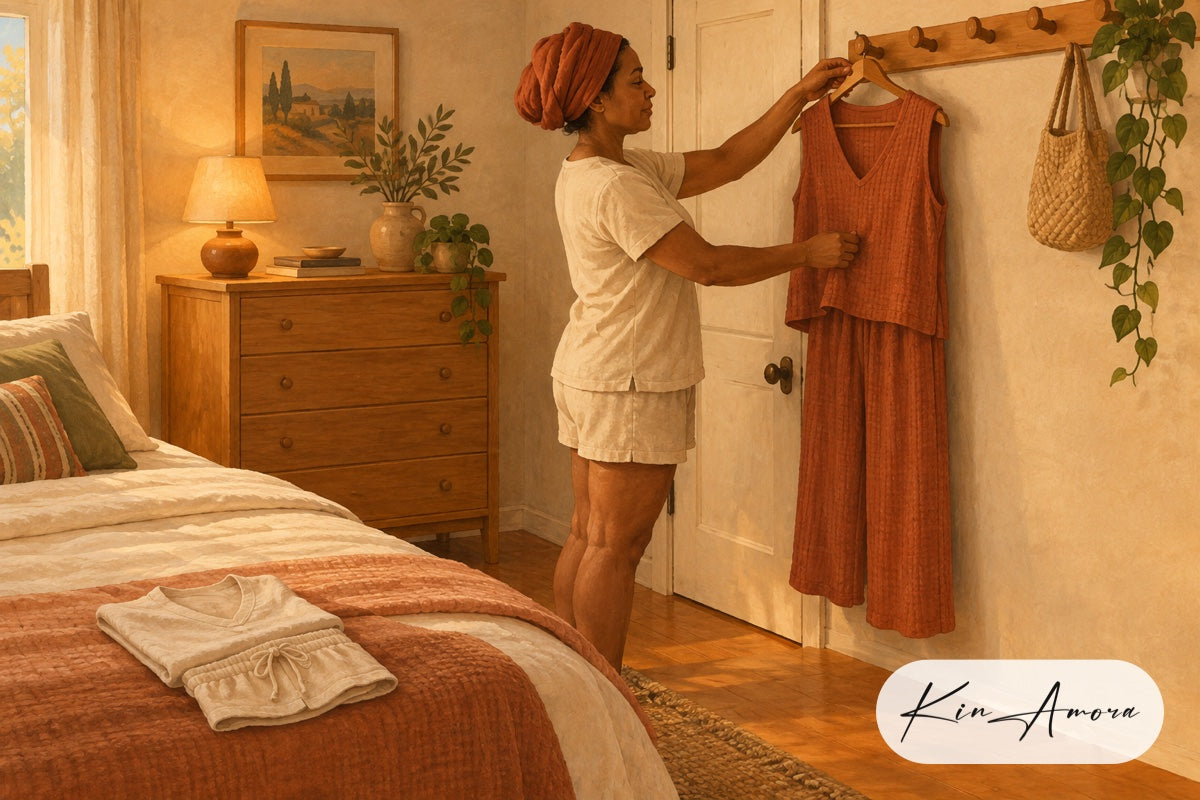
No, you don't need separate pajamas on a day spent entirely at home. A clean loungewear set that never left the house can go straight to bed. Change into a fresh set the next morning, so the clothes you slept in don't become the clothes you wear out.
Which fabrics are comfortable overnight?
Cotton, linen and rayon are comfortable overnight for most sleepers, because all three absorb moisture and feel cool on the skin. The University of Georgia Cooperative Extension lists cotton as absorbent, cool and comfortable to wear. The same extension guide calls linen the best-wicking natural fiber and describes rayon as absorbent. A cotton-rayon blend joins cotton's body with rayon's drape and absorbency, which suits warm rooms.
Bedroom temperature changes which fabric feels right. Cleveland Clinic sleep psychologist Michelle Drerup, PsyD, advises keeping the bedroom at 60 to 67°F (15 to 19°C), according to a 2021 Cleveland Clinic article. The same article advises sleeping in breathable pajamas, sheets and blankets suited to the season. A room near the top of that range suits thin cotton, linen or cotton-rayon, and a room at the bottom suits flannel or a soft knit.
The University of Georgia guide adds 2 notes on care. Rayon is weaker when wet and is damaged by perspiration, so a rayon-rich set worn to bed needs a cold, gentle wash and time to dry flat or on a line. The guide lists wool as warm and comfortable to wear, which suits cold rooms and winter travel.
Can you sleep in polyester pajamas?
Yes, you can sleep in polyester pajamas, but polyester holds odor and oil more than cotton does. The University of Georgia Cooperative Extension lists absorbing body oils and perspiration odor as limits of polyester, and notes that polyester builds up static electricity. Polyester takes up far less moisture than cotton or rayon. Choose cotton, linen or a cotton-rayon blend when you sleep warm, and keep polyester for cool rooms.
How do hot sleepers, travelers and guests use loungewear at night?
Hot sleepers, travelers and overnight guests use loungewear at night in 3 different ways.
For hot sleepers. Choose a thin cotton or cotton-rayon tank with a loose wide-leg or harem pant, and skip fleece and polyester. Short sleeves and an ankle-length leg in a woven fabric let air move under the covers.
For travelers. Pack a separate light sleep set, because a set worn through an airport has spent the day outside. A woven loungewear set covers the flight, and the sleep set stays in the room.
For overnight guests. Pack one clean loungewear set that doubles as sleepwear and breakfast clothes. A set you can sleep in and then wear to the kitchen looks dressed in front of a host, while old pajamas don't.
How often should you wash loungewear you sleep in?
Wash loungewear you sleep in at least as often as the sheets it lies on, and Cleveland Clinic dermatologist Sean McGregor, DO, advises washing sheets at least once a week. Wash sooner after a hot night, a sick day or a day outside. Use a cold, gentle cycle and hang cotton-rayon pieces to dry, because cotton and rayon can both shrink in heat. The guide to loungewear fabrics and care lists the safe wash for each common fabric, from linen to fleece.
Loungewear for day and night at Kin Amora, the Sunriser Top x Gypsy Flare Leg
The Sunriser Top x Gypsy Flare Leg is Kin Amora's loose loungewear set at $229, with a relaxed, oversized fit and soft draping. The set comes in One Size Fits Many or Plus, in Black, Turquoise, Silver or Charcoal. Both pieces are cut from a 60% cotton, 40% rayon blend, handmade in Morocco.
The Sunriser Top is an oversized tee with cold-shoulder cutouts, soft draping and wide, loose sleeves. The Gypsy Flare Pant is a full-length wide leg with an elastic waistband and pockets, relaxed and flowing through the leg. Mix-and-match colors can be requested through the order notes, and waist tailoring for the pant can be requested the same way.
The set suits wearers who want one loose, breathable set for home days, travel and slow mornings. The set does not suit anyone who wants dedicated pajamas, flannel warmth for a cold room, or sleep shorts for a hot one. Kin Amora doesn't describe the set as sleepwear, and the product page gives no care line, so check the sewn-in label before washing. Browse the full range of Kin Amora loungewear sets to compare cuts and colors.