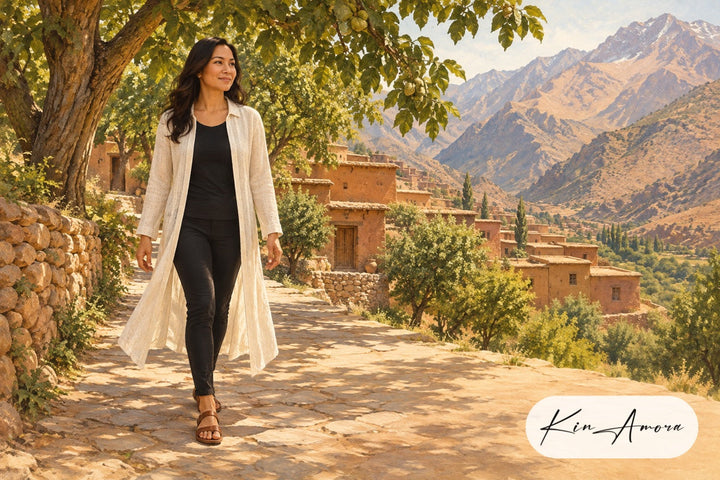
What is loungewear?
Loungewear is a category of clothing designed for relaxing at home, cut loose enough to rest in and finished well enough to be seen in. Loungewear sits between sleepwear and streetwear. The defining attribute of loungewear is comfort that doesn't look like bedclothes.
A loungewear piece usually shares 4 features with every other piece in the category.
- Relaxed cut: wide legs, a dropped crotch, dropped shoulders or an unfitted body.
- Soft waist: an elastic band, a drawstring or a wrap tie instead of a zip and button.
- Breathable fabric: cotton, rayon, modal, linen or a soft knit.
- Presentable finish: clean hems, intentional colors and prints, and seams that hold their shape.
Pajamas share the first 3 features. The fourth one, the finish, is what moves a garment from the bedroom to the living room and sometimes to the café.
What does loungewear mean?
Loungewear means clothes to lounge in. The word joins the verb "lounge," which means to sit or lie in a lazy, relaxed way, with the suffix "-wear," which means clothing of a given kind. The same suffix forms sleepwear, swimwear and activewear.
The idea is older than the word. In the 1920s and 1930s, wide-legged lounging pajamas were worn at home and at seaside resorts as daytime clothes. Loungewear became an everyday category in 2020, when the COVID-19 pandemic kept millions of people working from home and dressing for the sofa.
What are examples of loungewear?
Loungewear has 12 common examples, such as matching sets, wide-leg pants and kimonos. Each example below is defined by its cut, because the cut decides whether a piece rests well and still looks dressed.
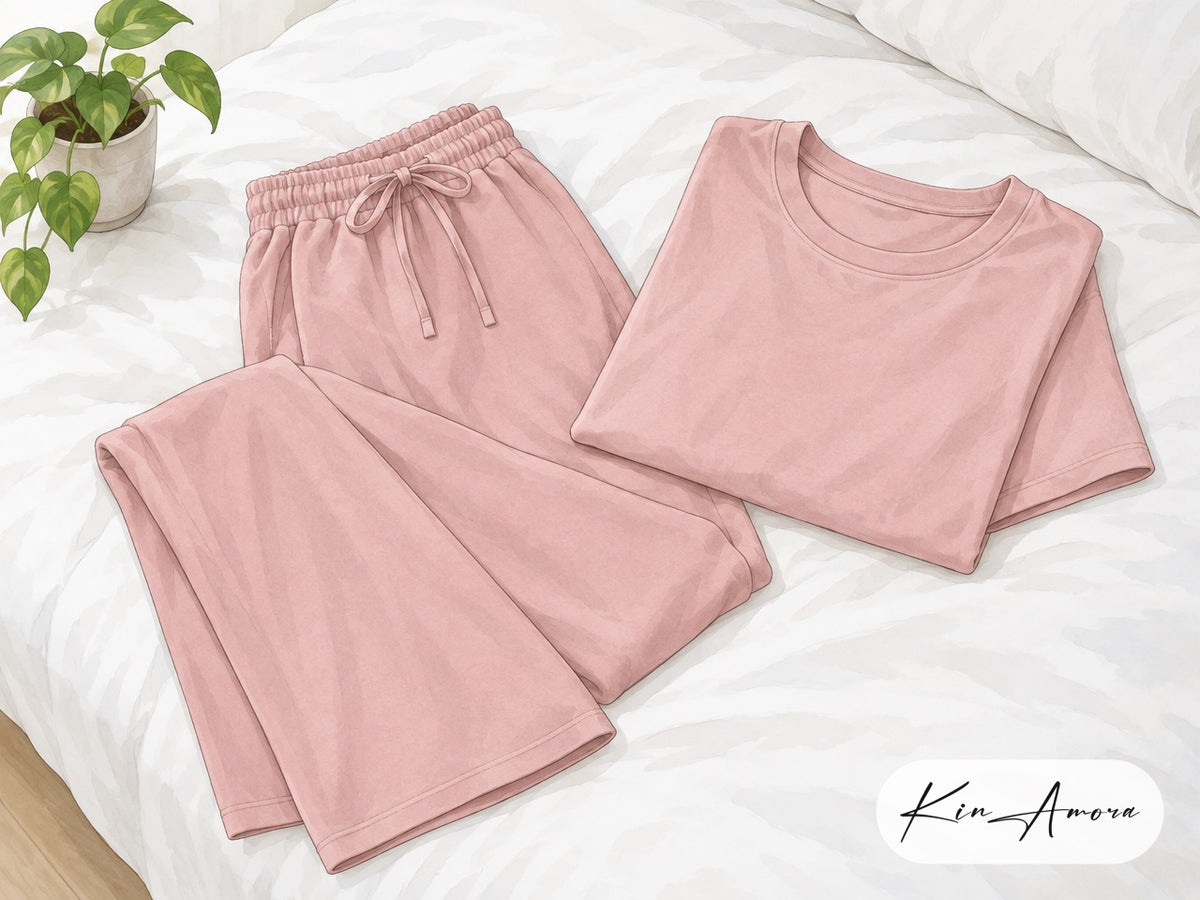
- Matching sets: a top and a bottom made in the same fabric or print and sold together.
- Wide-leg pants: pants that fall loose and straight from the hip to the hem.
- Harem pants: pants with a dropped crotch and a gathered or tapered ankle.
- Joggers and sweatpants: knit pants with an elastic waist and cuffed ankles.
- Kimonos and dusters: open-front layers with wide sleeves and no buttons.
- Kaftans: long, loose robes or tunics with wide sleeves, rooted in North African and Middle Eastern dress.
- Lounge dresses: loose maxi or midi dresses without a fitted waist.
- Tees and tanks: soft, relaxed tops in cotton or rayon.
- Tunics: long tops that reach the hip or the thigh.
- Hoodies and sweatshirts: pullover knits in fleece or French terry.
- Cardigans: soft knit layers that button or tie at the front.
- Jumpsuits and rompers: one-piece garments with a relaxed body.
8 of these loungewear examples differ clearly by fabric, season and how far they travel from the house.
| Loungewear example | Typical fabric | Best season | Common use outside the home |
|---|---|---|---|
| Matching set | Cotton, rayon or cotton-rayon | Spring to fall | Errands, travel, casual lunches |
| Wide-leg pants | Rayon, cotton-rayon or linen | Warm months | Travel, beach towns, casual work |
| Harem pants | Cotton-rayon or rayon jersey | Warm months | Travel, yoga, festivals |
| Joggers | Cotton fleece or French terry | Cool months | Gym runs, school pickup |
| Kimono | Rayon or cotton | Warm months | A light layer over a tee or swimsuit |
| Kaftan | Cotton, rayon or silk | Warm months | Resorts and beach cover-up |
| Lounge dress | Rayon, cotton jersey or modal | Warm months | Daytime outings with sandals |
| Hoodie | Cotton fleece | Cool months | Errands and flights |
Men's loungewear covers the same categories, cut wider at the shoulder and longer in the rise. The most common men's examples are drawstring wide-leg pants, harem pants, tanks, tees and long open kimonos.
Pull-on lounge pants sit behind several of these examples, and a shaped leg, side pockets and an ankle-length hem set them apart from pajama pants.
What fabrics is loungewear made of?
Loungewear is made mostly from 6 fabrics: cotton, rayon, modal, cotton-rayon blends, linen and knit fleece. Each fabric trades softness, breathability and warmth in a different way.
| Fabric | Fiber type | Feel | Best season | Care note |
|---|---|---|---|---|
| Cotton | Natural plant fiber | Soft, breathable, absorbent | All year | Can shrink in a hot dryer |
| Rayon (viscose) | Regenerated cellulose from wood pulp | Smooth, cool, drapes well | Warm months | Wash cold, hang to dry |
| Modal | A type of rayon, often from beech wood pulp | Silky and soft | All year | Holds shape better than standard viscose |
| Cotton-rayon blend | Cotton mixed with rayon | Soft body with fluid drape | Warm months | Wash cold, hang to dry |
| Linen | Natural flax fiber | Crisp, airy, wrinkles easily | Hot months | Softens with every wash |
| Fleece and French terry | Knit cotton or polyester | Thick, warm, brushed | Cool months | Pills when washed with rough fabrics |
Bamboo fabric is usually a rayon too. According to the Federal Trade Commission's textile labeling rules, most soft "bamboo" fabric is made through the rayon process and must be labeled "rayon made from bamboo" or "viscose from bamboo."
A cotton-rayon blend is the most common choice for warm-weather loungewear. Cotton gives the fabric body and breathability, and rayon adds drape and a cool hand. Kin Amora cuts its pieces from a 60/40 cotton-rayon fabric, meaning 60% cotton and 40% rayon, and the properties of that cotton-rayon blend fabric explain why the pants swing instead of cling.
Which loungewear fabric is the softest?
Modal and rayon are the softest common loungewear fabrics. Both are regenerated cellulose fibers with a smooth surface, so they feel silky against the skin. Rayon also hangs heavier than cotton, which is why it drapes into folds instead of standing away from the body. Anyone curious about how wood pulp becomes thread can read how rayon fiber is made. Cashmere knits feel softer still, but cashmere costs more and usually needs hand washing.
How should loungewear fit?
Loungewear should fit loosely enough to sit cross-legged and raise both arms without the seams pulling. A good loungewear fit has 3 checkpoints.
- Waist: an elastic or drawstring waist that stays up without digging in.
- Seat and thigh: room to sit on the floor or fold a leg under you.
- Hem: pants that end at the ankle or just above the floor, so they don't drag.
Many relaxed pieces come in one size. Elastic waists, wrap ties and wide cuts let one pattern fit a broad range of bodies, which is what the phrase one size fits most promises on a label. Kin Amora sells its sets in one size for this reason, and the Croatia Top x Santorini Set and the Aurora Top x Playa Pant are both listed as One Size Fits Many.
A petite wearer gets a cropped or ankle length from a full-length lounge pant and can roll a wide hem once. A tall wearer gets the best length from harem pants and gathered-ankle styles, because a cuffed ankle hides a short inseam.
What is the loungewear aesthetic?
The loungewear aesthetic is a relaxed, put-together look built on matching sets, soft fabrics and a narrow color palette. The aesthetic has 3 common versions.
- Minimal neutral: cream, oatmeal, gray and black sets with no print.
- Sporty: joggers, hoodies and leggings with a gym influence.
- Boho and resort: wide-leg pants, kimonos, kaftans, fringe, earth tones and prints.
Kin Amora's clothing sits in the boho and resort version. Kin Amora pairs loose pants with cowl-neck tops, fringe details and open kimonos.
Which pieces count as loungewear and which do not?
Loungewear includes any relaxed piece you can rest in and still be seen in, and it excludes rigid clothes and pure sleepwear. These 8 common garments sort as follows.
- Hoodies count as loungewear, because they are soft, loose knits.
- Sweatpants and joggers count as loungewear, and they are the most common loungewear pants.
- Leggings count as loungewear at home and as athleisure at the gym.
- Tracksuits count as loungewear when they are soft cotton knits, and as activewear when they are technical fabrics.
- Robes count as loungewear when they are open layers worn over clothes, and as sleepwear when they are bathrobes.
- Kaftans and kimonos count as loungewear and as resortwear.
- Pajamas don't count, because pajamas are made for sleeping.
- Jeans don't count, because denim has a rigid waistband and a zip fly.
Is loungewear the same as pajamas?
No, loungewear is not the same as pajamas. Pajamas are made for sleeping, and loungewear is made for waking hours at home and short trips out. The table compares loungewear with its 2 closest neighbors.
| Attribute | Loungewear | Pajamas | Athleisure |
|---|---|---|---|
| Main purpose | Resting while awake | Sleeping | Exercise and casual wear |
| Worn in public | Often | Rarely | Often |
| Typical fabric | Cotton, rayon, modal, linen | Cotton, flannel, satin | Nylon, polyester, spandex blends |
| Waist | Elastic, drawstring or tie | Elastic or drawstring | Wide stretch band |
| Design detail | Prints, fringe, finished hems | Piping, sleep prints | Seams placed for movement |
What is the difference between loungewear and athleisure?
The difference between loungewear and athleisure is purpose. Athleisure is athletic clothing, such as leggings, sports bras and zip jackets, worn outside the gym. Loungewear is rest clothing. Athleisure uses stretch and moisture-wicking synthetics, while loungewear favors soft natural and cellulose fibers.
Is loungewear the same as resortwear?
No, loungewear is not the same as resortwear, though the two overlap. Resortwear is clothing for warm-weather holidays, such as kaftans, linen sets and cover-ups, made to move from beach to dinner. Loungewear is rest-first clothing for home. A wide-leg cotton-rayon set belongs to both groups, and the guide to what resortwear is covers the holiday side.
Can loungewear be worn outside?
Yes, loungewear can be worn outside when it is clean, smooth and paired with outdoor shoes and one structured piece. A matching set reads as an outfit rather than as pajamas, because the top and bottom were designed together. Add sandals or leather sneakers, a belt or a woven bag, and simple jewelry. The steps for styling matching sets show which shoes and layers work with each cut.
Is loungewear appropriate for work?
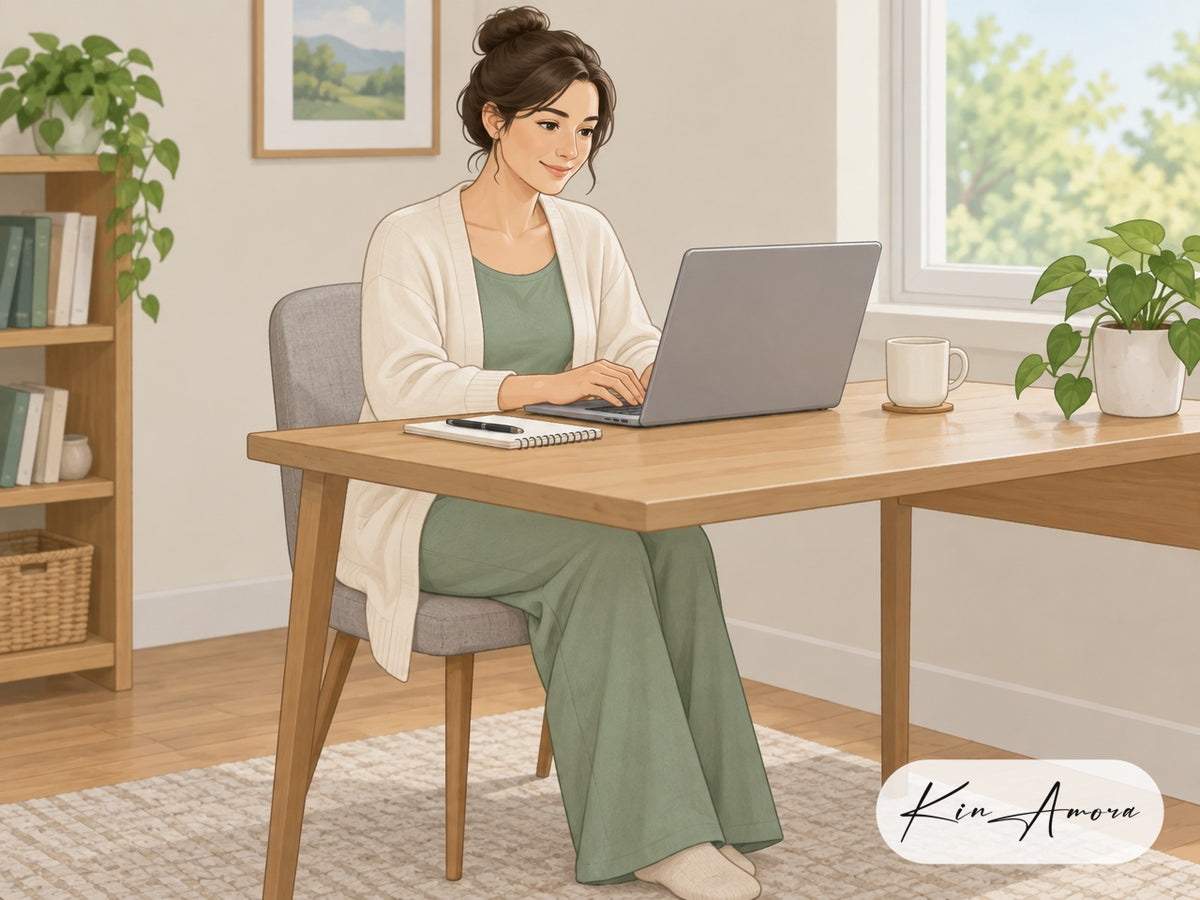
Loungewear is appropriate for work from home and for casual offices, and it isn't appropriate for formal offices. A loungewear set with a structured layer, such as a duster or a jacket, passes most casual dress codes.
Can you sleep in loungewear?
Yes, you can sleep in loungewear, because it is soft and loose. Keeping separate pajamas keeps your loungewear fresher and makes it last longer between washes.
How do different people wear loungewear?
Travelers, yoga practitioners and men use loungewear in 3 different ways. Each perspective below comes from how the garment behaves, not from a trend.
Loungewear for travelers
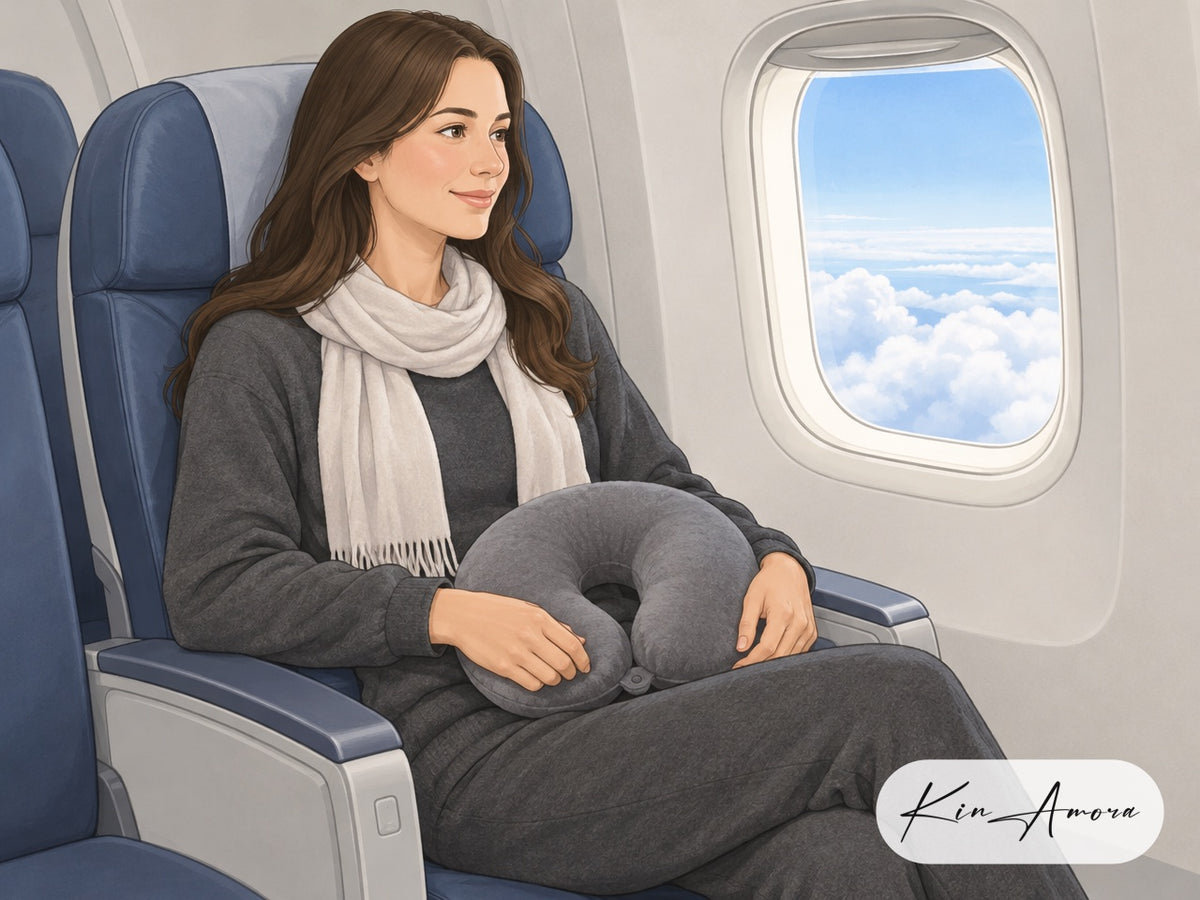
A traveler wears loungewear on planes, trains and long drives because elastic waists and loose legs stay comfortable for hours of sitting. Wide-leg pants and a tee in a cotton-rayon blend also pack small and recover from creases with a shake. For layering tips and shoe choices, the guide to long-flight outfits applies the same rules to a full travel day.
Loungewear for yoga and meditation
A yoga or meditation practitioner wears loose loungewear pants because a dropped crotch and wide legs allow cross-legged sitting without pulling. Natural and cellulose fibers breathe during slow practice better than many synthetics. The right fabric for meditation clothes depends on heat, stillness and how long you sit.
Loungewear for men
A man wears loungewear in the same relaxed cuts as everyone else, with drawstring pants, tanks and open kimonos as the core pieces. Men who want longer rises and wider shoulders can browse the men's relaxed clothing that Kin Amora groups for both wearers.
Is loungewear one word?
Yes, loungewear is one word. Dictionaries spell loungewear as a closed compound, with no space and no hyphen. Loungewear is also an uncountable noun, so "a loungewear" isn't standard English. People say "a loungewear set," "a loungewear dress" or "a piece of loungewear" instead.
How do you wash loungewear?
Wash loungewear on a cold, gentle cycle and hang it to dry, because cotton and rayon can both shrink in heat. Turn printed pieces inside out to protect the color. Skip the dryer for rayon, or use the lowest heat setting for the shortest time. The full routine for washing a cotton-rayon blend covers water temperature, detergent and drying.
Kin Amora loungewear: handmade cotton-rayon sets from Morocco
Kin Amora makes loungewear sets from 60/40 cotton-rayon fabric, handmade by artisans in Morocco and cut in one relaxed size. Each set pairs a top with a matching pant, so the outfit works at home, on a flight or at a beach dinner. Kin Amora's sets include the Lisbon Top with the Gypsy Flare Pant ($240), the Croatia Top with the Santorini Pant ($240) and the Aurora Top with the Playa Pant ($260). To see every pairing in one place, browse Kin Amora's handmade loungewear sets.