
Is cotton or rayon better for a summer dress in 90 degree heat?
Rayon is better for a loose summer dress in 90 degree heat, and cotton is better for a fitted dress or one that goes in the wash after every wear. Ohio State University Extension describes rayon as more moisture absorbent than cotton, breathable and comfortable to wear. Rayon's fluid drape keeps a loose dress hanging off the body, so air reaches the skin.
Cotton earns its place for a different reason. University of Georgia Extension lists cotton as absorbent, cool and comfortable to wear, and its fiber chart marks rayon "weaker when wet" with no such warning for cotton. A cotton sundress takes daily sweat and washing with less care.
What is the main difference between cotton and rayon in summer?
The main difference between cotton and rayon in summer is how each fiber handles moisture, with viscose rayon at about 13% moisture regain and cotton at about 8.5%. Moisture regain is the water a dry fiber takes up from the surrounding air. Both values are the standard figures used in a textile course from IIT Delhi on India's NPTEL platform. Rayon absorbs more, but regular rayon has low wet strength, according to Ohio State University Extension, so it pays for that absorbency when it is soaked.
The table compares the two fibers on the attributes that matter in a 90°F (32°C) summer.
| Attribute | Rayon (viscose) | Cotton |
|---|---|---|
| Fiber class | Manufactured, regenerated cellulose | Natural, seed fiber of the cotton plant |
| Moisture regain | About 13% | About 8.5% |
| Feel in dry heat | Cool, smooth and soft | Cool, soft to crisp |
| Strength when soaked | Weaker when wet | No wet-strength warning in extension charts |
| Drape in a dress | Fluid, falls in folds | Holds more body and shape |
| Wrinkling | Wrinkles easily | Wrinkles unless treated |
| Shrinkage | Untreated rayon can shrink up to 10% in a machine wash | Lower than untreated rayon |
| Washing | Cold water, gentle cycle, no wringing | Tolerates warmer washes when the label allows |
Rayon wins on coolness and drape, and cotton wins on wash durability, so the cut of the dress decides which strength you need more.
Is rayon or cotton more breathable?
Rayon is at least as breathable as cotton at the fiber level, because rayon absorbs more moisture and Ohio State University Extension calls it breathable. The weave and the cut matter more than the fiber, though. A thin, open cotton voile lets more air through than a dense rayon twill, and a loose cut beats a tight one in either fiber.
Is cotton vs viscose for summer a different question?
No, cotton vs viscose for summer is the same question, because viscose is the most common form of rayon. Ohio State University Extension notes that regular rayon is identified on labels by the term "viscose." The same fact sheet describes high wet modulus rayon, sold under the trade name Modal, which can be machine washed and tumble dried and performs much like cotton.
Is cotton or rayon better in humid heat?
Cotton is better than rayon in humid heat when the dress gets soaked and washed often, while rayon still feels cooler on a loose dress. Humid air slows drying, so a dress stays damp for longer. Regular rayon becomes unstable and may stretch or shrink when wet, according to Ohio State University Extension.
Ohio State's fact sheet names 2 humid-weather problems for viscose. Bias-cut dresses in rayon crepe can develop uneven hemlines, a problem the sheet calls especially bothersome in damp climates. Some rayon sizings and dyes are moisture-sensitive and form rings where raindrops or splashes land. Linen is a third option in this weather, since University of Georgia Extension calls linen the best wicking of the natural fibers and cool to wear, though it wrinkles badly unless treated.
Which weaves keep a summer dress coolest?
The coolest summer dresses use light, open weaves, and the weave changes how a dress feels as much as the fiber does. Summer dresses come in 5 common weaves.
- Voile, a light and sheer plain weave, usually cotton, that lets air pass easily.
- Gauze, an open, loosely woven cloth with visible gaps between the yarns.
- Challis, a soft, light plain weave common in rayon, with a fluid drape.
- Poplin, a tightly woven plain weave that feels crisp and blocks more light.
- Crepe, a crinkled weave from twisted yarns that drapes well but stretches when damp.
Voile, gauze and challis suit the hottest days. Poplin suits a structured dress that has to look neat. The guide to what makes fabric breathable explains how fiber, weave and finish change the way a garment lets heat and moisture escape.
Which should you choose for a summer dress, cotton or rayon?
Choose rayon for loose, flowing dresses on hot days, and choose cotton for fitted dresses and everyday pieces that you wash after each wear. The 4 situations below settle most cases.
- Choose rayon or a cotton-rayon blend for a maxi, kaftan or tank dress that hangs loose.
- Choose cotton for a fitted sundress, a shirt dress or anything that sits close at the waist.
- Choose cotton or linen for dresses you sweat through and wash daily in humid weather.
- Choose modal for a rayon feel with easier washing.
Which relaxed cuts add airflow?
Relaxed cuts add airflow by leaving space between the cloth and the skin, so moving air reaches the body. Five relaxed cuts work well in 90 degree heat.
- Wide-leg pants, where the leg swings clear of the skin as you walk.
- Harem pants, where the dropped seat keeps cloth off the thighs.
- Tank maxi dresses, where open armholes and a loose skirt let air in.
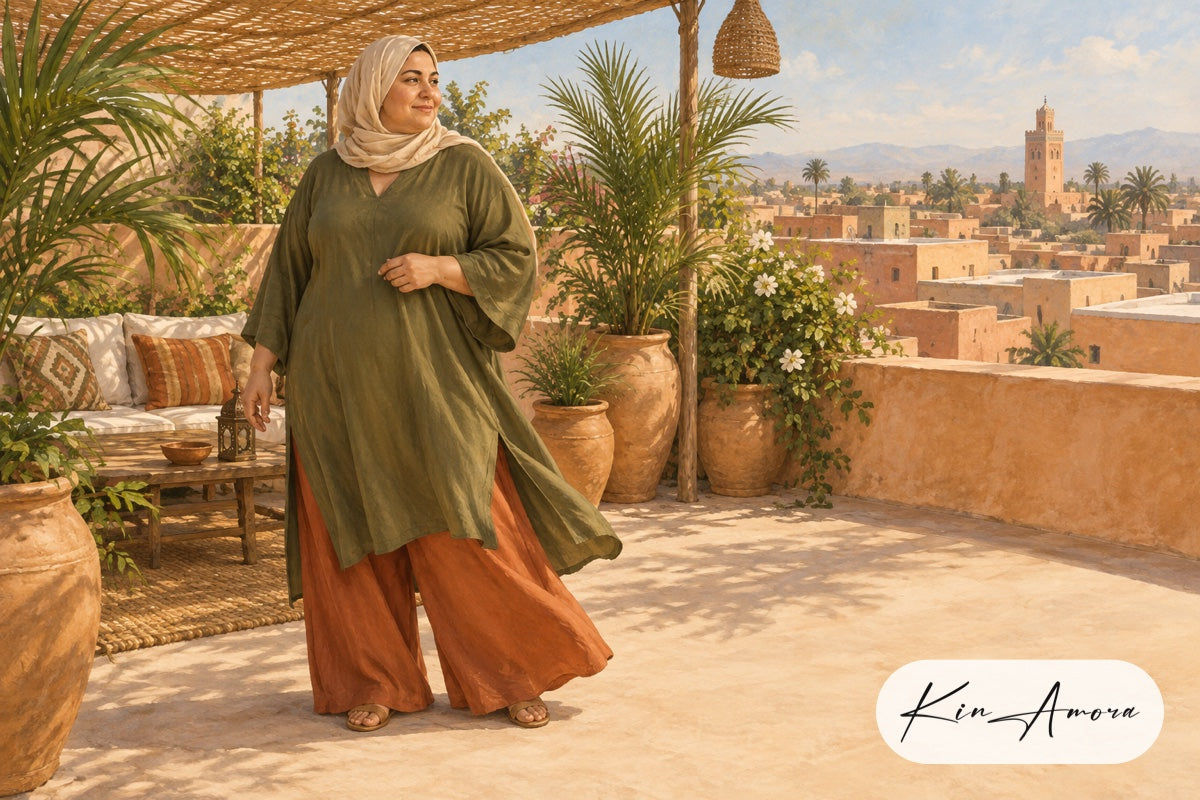
- Kaftan-style tunics, where wide sleeves and side openings vent heat.
- Open kimonos, worn over a tank so the front stays open to the breeze.
Rayon suits all 5 cuts, because its drape lets extra width fall close to the body instead of puffing out.
Is a cotton-rayon blend good for summer?
Yes, a cotton-rayon blend is good for summer, because it pairs rayon's absorbency and drape with cotton's body. A worked example in the same IIT Delhi NPTEL course weights the two fibers by share and arrives at about 10.3% moisture regain for a 60/40 cotton-viscose mix, a calculated figure rather than a lab measurement.
Cotton keeps the cloth from turning limp, while rayon lets a wide leg or a full skirt hang. The fuller comparison of drape, shrinkage and wrinkling sits in the guide on how rayon and cotton wear in relaxed clothing.
How should you wash cotton and rayon after a hot day?
Wash rayon and cotton-rayon summer pieces in cold water on a gentle cycle, then air dry them, and let sturdy cotton go warmer when its label allows. Ohio State University Extension gives a careful routine for washable viscose in 4 steps.
- Support the wet fabric, since rayon has low wet strength.
- Squeeze out water gently instead of wringing.
- Roll the piece in a towel to take up more water.
- Smooth and shape it, then lay it flat or hang it on a non-rusting hanger.
Untreated regular rayon can shrink as much as 10% in a machine wash, according to the same fact sheet. The care label comes first, because some viscose pieces say dry clean only.
How do cotton and rayon suit different summer wearers?
Cotton and rayon suit different summer wearers by trip length, climate and washing habits.
For travelers. Rayon and cotton-rayon pieces roll small and feel cool on a long day of sightseeing. Hang them in a steamy bathroom on arrival to drop the creases, and pack a cotton dress for days you plan to wash in a hotel sink.
For humid climates. Pick loose cuts and open weaves, and skip bias-cut rayon crepe, which can stretch unevenly in damp air. Cotton and linen take daily washing in this weather with less risk.
Cotton-rayon summer pants and dresses at Kin Amora
Kin Amora cuts most of its clothing in a 60% cotton, 40% rayon blend, handmade by local artisans in Morocco, so each piece pairs cotton's body with rayon's drape. The pants carry the blend in relaxed shapes.
- The Gypsy Flare Pant ($120) is Kin Amora's version of the wide leg, with pockets, an elastic waistband and Small to XLarge sizing.
- The Stella Wide Leg ($165) has a front panel, an elastic back and pockets, in Small, Medium and Large.
- The Marrakesh Harem Pant ($145) has pockets and an elastic waistband, in One Size Fits Most.
The same blend runs through the summer dresses. The Bora Bora Dress ($170) is a tank dress with an adjustable waist string and side pockets. Koya's Summer Pleated Dress ($210) is a maxi with a pleated V front and short sleeves, in One Size Fits Many and Plus. Tailoring on request goes through the order notes on the pant pages. These pieces suit anyone who wants loose, cool clothes for 90 degree days and can wash cold. They do not suit anyone who wants 100% cotton for hot washes and a hot dryer. Compare every cut and color in Kin Amora's relaxed cotton-rayon pants, and add your waist in the order notes when you want it tailored.