
What makes a fabric breathable in summer clothes?
A fabric is breathable in summer clothes when air and water vapor pass through it easily and its fiber takes sweat off the skin. Textile researchers call the airflow part air permeability, according to a 2026 Associated Press report by Aya Diab that interviewed 4 university researchers. The vapor part depends on how much moisture the fiber absorbs and how quickly the cloth lets it go.
Breathability rests on 4 working parts.
- Air permeability is the ease with which air moves through the cloth, and it carries warm, moist air out of the garment.
- Moisture absorption is the water vapor a fiber takes into itself, which textile scientists report as moisture regain.
- Wicking is the spread of liquid sweat away from the skin and across a larger area of the cloth.
- Weave is the pattern and spacing of the yarns, which sets how many open gaps air can pass through.
The fiber on the label explains only part of this. Meredith McQuerry, a Florida State University professor who studies clothing performance, told the AP that "a more open woven structure will generally be more breathable, regardless of the garment's fiber." Fiber, construction and weight earn the word together.
Which fabrics are breathable?
The most breathable fabrics for summer are cellulose cloths such as linen, cotton and rayon in light, open weaves. McQuerry told the AP that cellulosic fibers such as cotton and flax (linen) tend to be more breathable and comfortable. Cellulose is the plant polymer these 3 fibers share, and it holds water vapor readily. Synthetic fibers such as polyester and nylon absorb very little moisture, so their comfort depends on how the fabric is engineered.
The table compares 7 common clothing fibers by fiber class, moisture absorption and how each one wears in summer heat.
| Fiber | Fiber class | Moisture absorption | How it wears in summer heat |
|---|---|---|---|
| Linen (flax) | Natural cellulosic | Best wicking of the natural fibers | Cool and crisp, wrinkles badly |
| Cotton | Natural cellulosic | 8.5% moisture regain | Cool and absorbent, heavy when soaked |
| Viscose rayon | Manufactured cellulosic | About 13% moisture regain | Soft, fluid and cool, weaker when wet |
| 60% cotton, 40% rayon | Cellulosic blend | About 10.3% (calculated) | Drapes and absorbs, needs a gentle wash |
| Silk | Natural protein | Absorbent | Light, loses strength when wet |
| Polyester | Synthetic | 0.4% moisture regain | Dries fast, clammy unless engineered to wick |
| Nylon | Synthetic | Low moisture absorption | Strong and resilient, melts in high heat |
The cotton, viscose and polyester values are the standard figures used in an IIT Delhi textile course on India's NPTEL platform, which works the 60/40 cotton-viscose blend out at 10.3%. The linen, silk and nylon entries come from University of Georgia Cooperative Extension's fiber guide, which gives them as descriptions rather than numbers.
What is breathable fabric made of?
Breathable fabric is made of absorbent fibers spun into yarns that leave gaps between them. Cotton, linen and rayon supply the absorbent fiber. A light yarn and a loose weave or knit supply the gaps. A dense, heavy cloth made from an absorbent fiber still traps heat, so the material and the build both count.
How does air permeability make a fabric breathable?
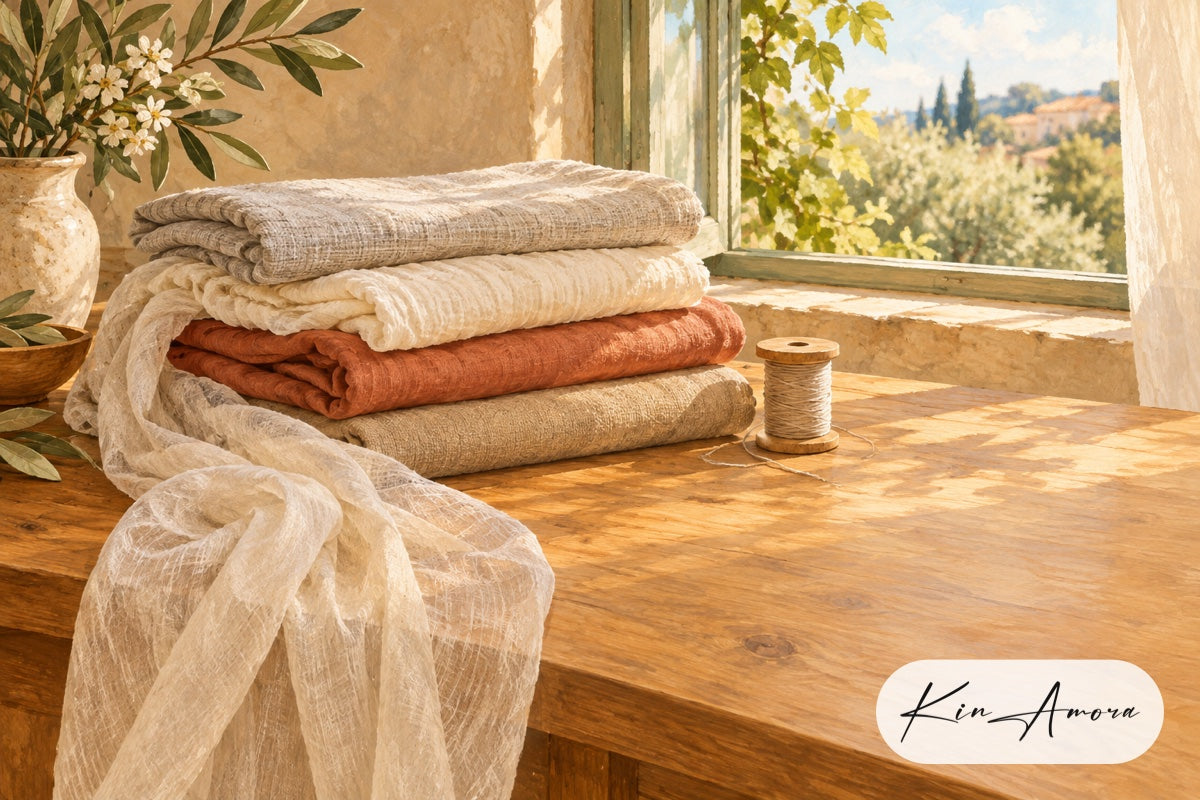
Air permeability makes a fabric breathable by letting air move through the gaps between yarns, which carries warm, humid air away from the skin. ASTM International's D737 test method measures the air permeability of textile fabrics, and the standard lists clothing among the products where the property matters.
Three features of a fabric set its air permeability.
- Yarn spacing decides how large and how many the open gaps are.
- Fabric weight decides how much material the air has to pass through.
- Finishes can close the gaps, and McQuerry advised choosing open weaves and loose knits free of water- or soil-repellent finishes for the most airflow.
The AP report adds that clothing comfort in heat depends on how heavy the fabric is, how the garment is made, how it fits and its color, not on fiber alone. A light cotton gauze and a heavy cotton denim share one fiber and sit at opposite ends.
Which weaves let the most air through?
Loose, lightweight weaves let the most air through, such as gauze, voile and challis. Gauze and voile are thin, open plain weaves used for summer shirts and dresses. Challis is a light, soft plain weave, and rayon challis is a common cloth for flowing pants and dresses. Tightly packed cloths such as denim, canvas and heavy twill pass far less air, even in cotton.
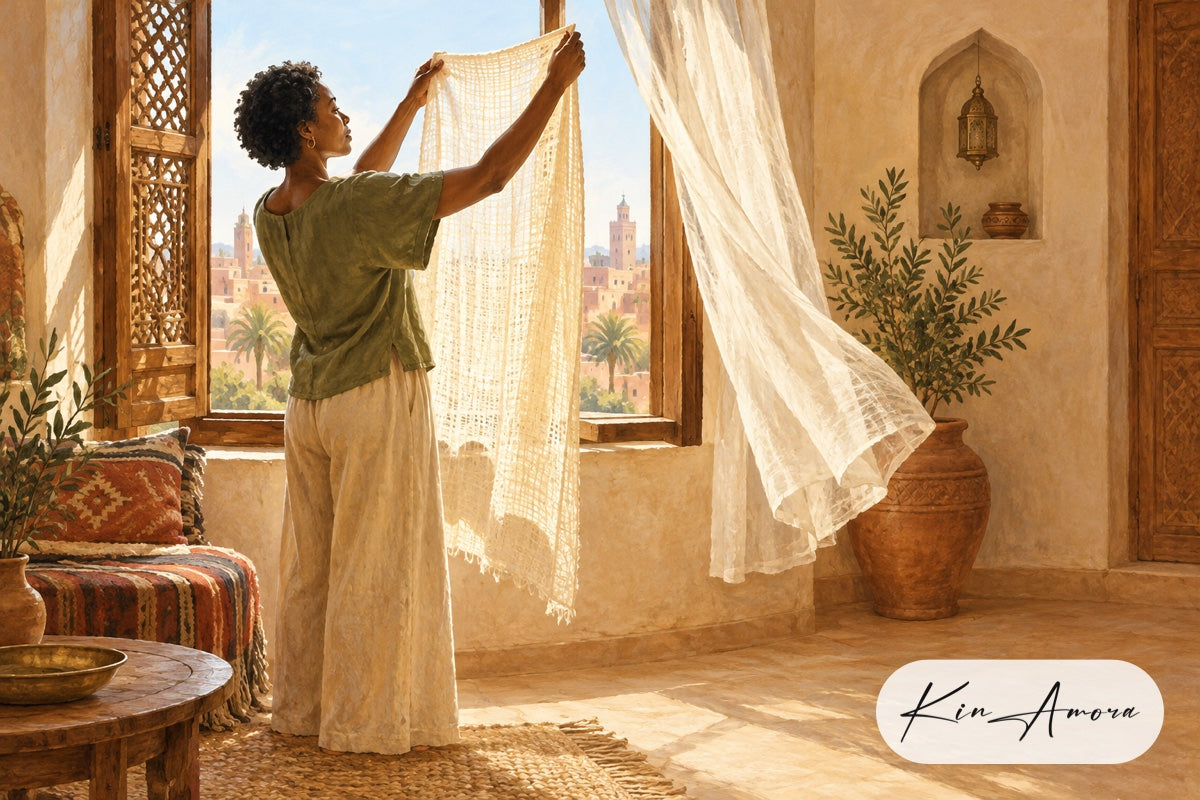
A home check works for any summer piece. Hold the cloth up to a window and look at how much light passes through. More light means more open gaps for air, although a sheer cloth also lets more sunlight reach the skin.
How does moisture absorption keep summer clothes comfortable?
Moisture absorption keeps summer clothes comfortable by drawing sweat vapor off the skin and into the fiber, so the skin feels less clammy. Textile scientists measure it as moisture regain, the water a dry fiber takes up from the surrounding air as a share of its dry weight. Viscose rayon regains about 13%, cotton 8.5% and polyester 0.4%, using the commonly cited values in the NPTEL course.
Rayon leads the group. Joyce A. Smith of Ohio State University Extension describes rayon as more moisture absorbent than cotton, breathable and comfortable to wear. A 60% cotton, 40% rayon blend lands between its two fibers, at an estimated 10.3% when the two values are weighted by share.
Absorption has a ceiling. The AP report notes that cotton absorbs sweat but can become heavy when saturated. A soaked cellulose garment hangs heavier and clings more, which is why absorbent fibers work best in cuts that hang away from the body.
Is wicking the same as breathability?
No, wicking is not the same as breathability, because wicking moves liquid sweat while breathability moves air and vapor. Wicking fabrics spread sweat away from the skin and across a larger surface, according to the AP report, but evaporation that happens farther from the skin gives less direct cooling.
The two strategies suit different days. George Havenith, emeritus professor of environmental physiology and ergonomics at Loughborough University, told the AP that the first rule in choosing clothing is not to hamper sweat evaporation. The table shows how absorbent fibers and engineered synthetics handle that rule.
| Attribute | Absorbent fibers (linen, cotton, rayon) | Engineered polyester |
|---|---|---|
| Where sweat goes | Into the fiber as vapor | Along the fabric surface as liquid |
| Feel on damp skin | Soft and dry at first, heavier when soaked | Light, but clammy in a dense weave |
| Drying | Slower once saturated | Quicker |
| Best use in heat | Relaxed everyday clothes | Workouts and long, sweaty exertion |
The AP report adds that during exercise polyester tends to keep evaporating sweat, while cotton works well for a shorter period. University of Georgia Extension rates linen as having the best wicking of the natural fibers, which it ties to linen being cool to wear. Linen pairs a cellulose fiber with the best wicking of the natural fibers, which is why linen leads the pairings below.
Does fit change how breathable clothes feel?
Yes, fit changes how breathable clothes feel, because a loose garment leaves room for air to circulate between cloth and skin. Havenith recommended garments with enough room for ventilation in hot outdoor conditions, in the AP report. McQuerry said that in casual settings a looser fit gives more airflow while standing or sitting, and that a tighter fit can suit physical activity because sweat evaporates faster.
A desert study shows the gap at work. Amiram Shkolnik and 3 colleagues reported in Nature in 1980 that a Bedouin in the hot desert gained the same amount of heat in a black robe as in a white one. The extra heat absorbed by the black robe was lost before it reached the skin. A loose robe, a wide leg and a dropped harem seat all keep that layer of moving air between the fabric and the body. Pants show this clearly, and the most breathable fabric for pants is linen or a light, open-weave cotton, with viscose and cotton-rayon close behind in loose cuts.
Which fabric is more breathable?
Linen is the most breathable everyday fabric, followed closely by open-weave cotton and rayon in loose cuts. Linen wicks best of the natural fibers, cotton and rayon absorb more than any synthetic, and an open weave raises airflow for all three. The table answers the 5 pairings people compare most often.
| Pairing | More breathable | Reason |
|---|---|---|
| Cotton or linen | Linen | Linen wicks best of the natural fibers |
| Cotton or polyester | Cotton | Cotton absorbs 8.5% against 0.4% for polyester |
| Rayon or polyester | Rayon | Rayon absorbs about 13% against 0.4% |
| Cotton or bamboo | Bamboo rayon, in an equal weave | Most bamboo fabric is rayon, which absorbs more than cotton |
| Nylon or polyester | Neither by much | Both absorb little, so the weave decides |
The bamboo row depends on a labeling fact. The Federal Trade Commission said in 2009 that most bamboo textile products, if not all, really are rayon, with no trace of the original plant left in the fiber. Weave and weight can overturn any row, so a gauzy polyester can pass more air than a thick cotton twill. For a loose summer dress, the comparison of cotton and rayon for summer favors rayon.
Which fibers do relaxed Moroccan pieces use?
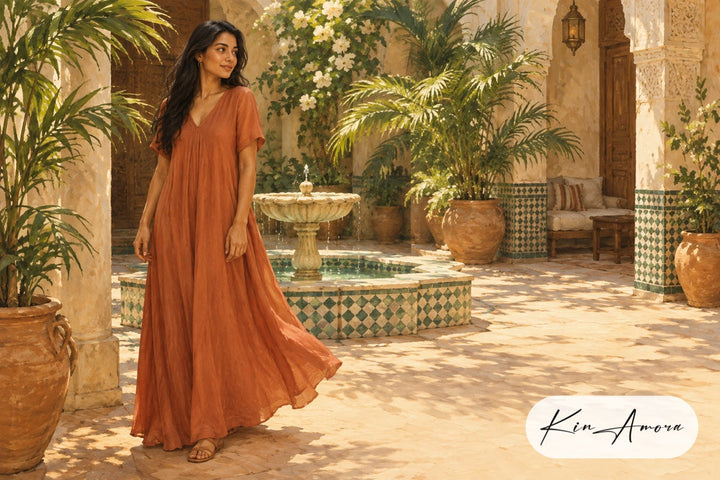
Kin Amora's relaxed pieces, handmade by local artisans in Morocco, list 60% cotton, 40% rayon on most of their labels. The cotton share gives the cloth body and keeps it stronger when wet. The rayon share raises absorption and lets the cloth fall in soft folds, away from the skin.
The blend serves breathability in 3 ways. It absorbs an estimated 10.3% moisture, a light weave of it lets air pass, and its drape falls into a loose line that leaves room for air. Rayon loses up to about half its strength when wet, so a cotton-rayon blend asks for a cold, gentle wash. The label rules and hand feel of this mix are explained in the guide to how a 60/40 blend feels.
Are synthetic fabrics breathable?
Yes, synthetic fabrics can be breathable, but only when the weave or knit is open, because polyester and nylon absorb almost no moisture themselves. Polyester's moisture regain of 0.4% leaves sweat on the skin or on the fabric surface. Engineered polyester can move moisture across the fabric and dry quickly, and Jonathan Chen, a textiles professor at the University of Texas at Austin, suggested lightweight polyester designed for breathability in the AP report.
The construction decides the result. The AP report notes that a porous athletic shirt can behave very differently from a dense garment, even when both labels say 100% polyester. Mesh, a fabric built with visible open holes, shows the rule at its extreme, since the holes pass air whatever the fiber. Fiber class shapes more than comfort, and the differences in care, feel and wear are compared in the guide to natural and synthetic fibers.
Is modal fabric breathable?
Yes, modal fabric is breathable, because modal is a form of rayon made from regenerated cellulose. The FTC's textile labeling guide lists modal as an ISO fiber name permitted on US labels. Modal is a high-wet-modulus rayon, so it holds its shape in the wash better than regular viscose. A modal knit sits closer to the skin than a loose woven, so a modal tee feels absorbent but less airy than a gauzy cotton shirt.
Which breathable fabric doesn't wrinkle?
No breathable cellulose fabric is fully wrinkle-free, and silk and fiber blends come closest. University of Georgia Extension lists linen as wrinkling badly unless treated, cotton as wrinkling unless treated and rayon as wrinkling easily. The same guide rates silk as moderately wrinkle resistant and polyester as wrinkle-resistant.
Blending trades some comfort for neatness. Smith of Ohio State University Extension notes that polyester, nylon and acrylic contribute strength, wrinkle resistance and ease of care to rayon blends. A cotton-rayon blend wrinkles less than pure linen and absorbs far more than a polyester blend, so steaming it on arrival suits travel.
How do breathable fabrics suit different wearers?
Breathable fabric needs change with the trip, the climate and the wardrobe. The notes below give one practical angle for 3 kinds of wearer.
For travelers. Pack absorbent, loose pieces in cotton, linen or a cotton-rayon blend, and roll them instead of folding to limit creases. Hang rayon and blends in a steamy bathroom on arrival to drop the creases.
For hot, humid climates. Humid air slows evaporation, so choose the most open weave you can find and a cut that hangs off the body. Bring a second outfit, because a soaked absorbent fiber hangs heavy until it dries.
For men. Wide or tapered pants and loose tops in cotton-rayon or linen give the same airflow as women's relaxed cuts. A camp-collar shirt in rayon or a tank in a cotton blend stays cooler than a fitted polyester tee.
Breathable summer fabric at Kin Amora, the 60/40 cotton-rayon pants
Kin Amora cuts most of its pants in a 60% cotton, 40% rayon blend, handmade by local artisans in Morocco, so every pair joins an absorbent fiber to a loose, draping cut. The table lists 4 pants and the details their product pages give.
| Pant | Cut and details on the product page | Price |
|---|---|---|
| Stella Wide Leg | Wide leg, front panel, elastic back, pockets, Small to Large | $165 |
| Gypsy Flare Pant | Wide leg, pockets, elastic waistband, Small to XLarge, 12 colors | $120 |
| Marrakesh Harem Pant | Harem cut, pockets, elastic waistband, One Size Fits Most | $145 |
| Womens Santorini Pant | Tapered leg, pockets, elastic waistband, Small to XL | $120 |
All 4 product pages list 60% cotton, 40% rayon and offer tailoring on request through the order notes. These pants suit wearers who want a loose, absorbent pant for hot days and travel, and who can wash cold and dry gently. They do not suit a buyer who needs a quick-drying synthetic for hard exercise or a pant that goes in a hot wash every week. Compare every cut and color in Kin Amora's cotton-rayon pants, and add your waist measurement in the order notes for tailoring.