


The fabric decides which fixes are safe. Kin Amora pieces are made from a 60% cotton, 40% rayon blend and are handmade by local artisans in Morocco. Rayon is a fiber regenerated from plant cellulose, usually wood pulp; it is soft and drapey but more heat-sensitive than cotton. That makes gentle steam the right tool and hot plates the risky one, and the same caution about heat applies when washing cotton-rayon at home.
Why do cotton and rayon wrinkle in a suitcase?
Cotton and rayon wrinkle because both are cellulose fibers held together by hydrogen bonds, and moisture lets those bonds break and re-form in whatever shape the fabric is pressed into. A suitcase adds hours of pressure. As any dampness evaporates, the new bonds hold the fold in place.
The Children's Museum of Indianapolis explains it in a 2020 article: cotton, linen and rayon are held together by hydrogen bonds, water gets between those bonds, and as it evaporates, fresh bonds lock in the creases. Wool, nylon and polyester crease through heat instead, around their glass transition temperature.
Textile labs test this formally. AATCC TM128-2017e2 wrinkles a fabric sample under a set load for a set time, then rates it against 3D reference replicas. A suitcase runs the same experiment, less politely.
The useful part is the reverse. Water that sets a crease can also release one, which is why nearly every fix below adds moisture and then lets the piece dry while it hangs straight.
How do you pack clothes so they don't wrinkle?
Pack clothes so they don't wrinkle by filling the bag snugly so nothing slides, laying long pieces with as few hard folds as possible, and keeping everything completely dry. Put heavy shoes and toiletries at the wheel end, where they won't sit on folded clothes and press the creases deeper.
- Pack dry, always. A top still damp from a sink wash will set creases in the bag. Give it a full night on a hanger first.
- Fill the space. A half-empty bag lets stacks shift and refold with every bump. Tuck socks and soft items into the gaps.
- Fold around something soft. A long dress wrapped around a rolled tee gets a curve instead of a knife-edge line.
- Button and zip before folding. Closed fronts keep a jacket or shirt square, so it doesn't twist into diagonal creases.
- Put the most crease-prone pieces on top. They get the least weight pressing on them and come out first.

Deciding what goes in the bag comes before all of this; our resort capsule packing list covers a warm-weather week in 12 pieces.
Does rolling clothes prevent wrinkles?
Rolling tends to reduce sharp creases on soft pieces such as knits and drapey cotton-rayon, but it doesn't prevent wrinkles altogether, and anything with a collar, pleats or structure usually comes out better folded. A roll swaps one hard fold line for a series of gentle curves, and curves relax faster once the piece hangs.
Be skeptical of anyone who says one method always wins. We couldn't find a controlled wrinkle test of rolling vs folding, only travel-blog anecdotes. So test it: roll one piece, fold a similar one, leave both overnight and compare.
| Piece | Roll or fold | Why |
|---|---|---|
| Knit tees and tanks | Roll | Knits bend without holding a line |
| Elastic-waist pants in a drapey fabric | Roll loosely from the waistband | No pressed crease to protect |
| Long dresses and skirts | Roll, or fold around a soft core | Long lengths crease worst at a single sharp fold |
| Collared shirts and pleated pieces | Fold, buttoned | Rolling bends the collar and scrambles pleats |
| Textured layers with ruffles | Fold loosely and pack on top | Ruffles crush when rolled tight |
Does the shower-steam trick work?
Yes, the shower-steam trick works on light and moderate wrinkles in cotton, rayon and linen: hang the piece in the bathroom, run a hot shower with the door shut, then smooth it by hand and let it dry before wearing it. Steam puts moisture back into the fibers, which is exactly what loosens a crease.
Use a hanger, not a hook, and keep the piece clear of the spray. Leave the fan off, and while the room is steamy, tug gently along seams and hems and smooth the fabric with flat palms.
Don't skip the drying step. Fabric that dries hanging straight sets smooth. Pull it on still damp, sit down for breakfast, and you'll set brand-new creases across your lap.
A sharp fold from days in a bag may need a second round, or the fixes below.
How do you get wrinkles out without an iron or a steamy bathroom?
Without an iron or a steamy bathroom, mist the creased area lightly with water, smooth it flat with your palms, and hang it to dry; a hair dryer on low heat, held several inches away and kept moving, speeds the drying. The water does the work, and the warm air just finishes it faster.

Other options, in the order we'd try them on a rayon blend:
- Damp towel press. Lay the piece flat on the bed, cover the crease with a damp hand towel, press with your palms, then lift and hang.
- Hotel dryer. If the care label allows a low tumble (the Mojave Dress label, for one, says tumble dry low), a short, low-heat cycle with a damp washcloth adds steam. Pull the piece out while it's warm and hang it at once.
- Hair straightener. We'd skip this one on cotton-rayon. The plates run hot and sit in one spot, and rayon is the heat-sensitive half of the blend. If you must, keep it to a collar or hem on the lowest setting.
Which fabrics hide wrinkles?
Fabrics that hide wrinkles are ones that already have texture or movement, such as crinkle and crepe surfaces, gauze, soft knits and busy prints. Smooth, crisp, solid-colored weaves show every crease, which is why a pressed linen shirt is so hard to keep fresh on a trip.
Crinkle texture already looks rumpled on purpose, so a few more creases from the bag disappear into it. Kin Amora's crinkle-texture Amalfi Jacket is described on its product page as a lightweight, breathable cardigan jacket with a delicate crinkled texture, raw-edge detailing and cascading ruffle panels. It was listed at $125 in White and Sage on October 13, 2026.
Drape helps differently: a cotton-rayon piece hangs in soft folds, so gravity works on creases all day. The catch is that smooth, drapey fabric still shows a sharp fold line, so pack it gently.
What's the one habit that prevents most travel wrinkles?
The one habit that prevents most travel wrinkles is hanging your clothes the moment you arrive, before you shower, eat or nap. Fresh creases are still loose, and a night on a hanger lets gravity release many of them. Leave them folded until morning and they've had another night to set.
Kin Amora designs its clothes for traveling, meditating, lounging and exploring, as Our Story puts it. On the road, that means a hanger and a hot shower should be all the care most pieces need.
Shop Related Products
Explore the pieces, colours and sizing on the Kin Amora store.

Amalfi Jacket
$125.00 USD
View product
Island Pants
$143.00 USD
View product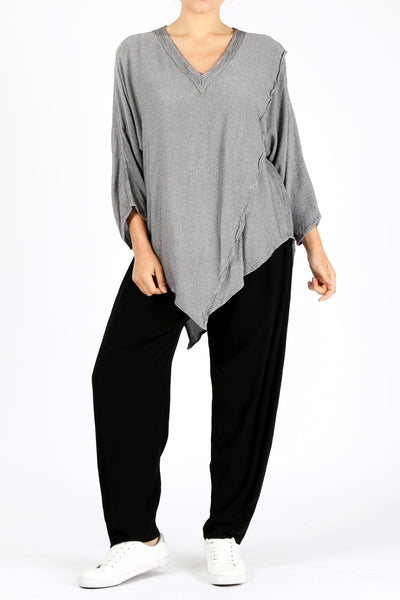
Milan Long Sleeve
$145.00 USD
View productFrequently Asked Questions
Can you bring wrinkle-release spray in a carry-on?
Yes, in a container of 3.4 ounces (100 milliliters) or less, packed in your one quart-sized liquids bag, under the TSA liquids rule. Larger bottles go in checked baggage. Plain tap water in a small, empty spray bottle handles light creases too.
Do compression packing cubes cause more wrinkles?
They can. Squeezing the air out presses every fold harder. Compress knits and sleepwear, and keep crinkle-texture or drapey pieces in a regular cube or on top.
Can you iron a rayon blend at the hotel if you need to?
Yes, carefully. Check the care label first, choose a low setting, press the piece inside out or through a thin cloth, and test on an inside seam. Rayon tolerates slightly lower ironing temperatures than cotton, according to Ohio State University Extension, so keep the iron low.
Will wrinkles fall out if you just wear the piece?
Light ones often soften with wear in drapey fabric, because body warmth and moisture loosen creases. Deep fold lines usually stay, so give those the steam treatment first.
Should you use a hair straightener to get wrinkles out of cotton-rayon clothes?
No, skip the hair straightener on cotton-rayon, because the plates run hot and sit in one spot, and rayon is the heat-sensitive half of the blend. If you must use one, keep it to a collar or hem on the lowest setting. On a rayon blend, we'd try a damp towel press first, then a short, low-heat hotel dryer cycle if the care label allows a low tumble.



