
We know this blend well, because Kin Amora pieces are made from a 60% cotton, 40% rayon blend and are handmade by local artisans in Morocco. Fabric is only one part of what makes Moroccan artisan clothing different, so this article stays with the cloth and what that ratio means when you wear it.
Is rayon natural or synthetic?
Rayon is neither fully natural nor fully synthetic. It starts as plant cellulose, but a chemical process dissolves that cellulose and re-forms it into a new fiber. The FTC's textile rules (16 CFR 303.7) define rayon as a manufactured fiber composed of regenerated cellulose, so it isn't a natural fiber in the strict sense.

Cotton sits on the other side of that line. It grows as a seed fiber on the cotton plant, and a 2024 review in Frontiers in Bioengineering and Biotechnology puts an average mature fiber at 88.0% to 96.5% cellulose.
So the blend pairs two forms of the same plant polymer. One is grown, the other is rebuilt in a factory. You'll often see rayon called semi-synthetic, and that's a fair shorthand.
What the blend isn't is "all natural". If a seller describes a cotton-rayon piece that way, they're rounding up.
What does 60/40 mean on a clothing label?
On a US clothing label, 60/40 means cotton makes up 60% of the fiber weight and rayon makes up 40%, with the larger share listed first. The FTC's textile labeling guide requires generic fiber names and percentages by weight, in descending order of predominance.
Two quirks help when you shop. The same guide notes that the ISO standard uses the name viscose for the predominant form of rayon, so a European tag reading "viscose" points to the same fiber family.
And in general, a fiber has to reach 5% of the weight before it can be named on the tag. The exceptions are wool, which must always be named, and fibers that do a specific job at a small share, such as spandex for stretch, which is why you'll still see "3% spandex" on some tags.
What does 60% cotton 40% rayon feel like?
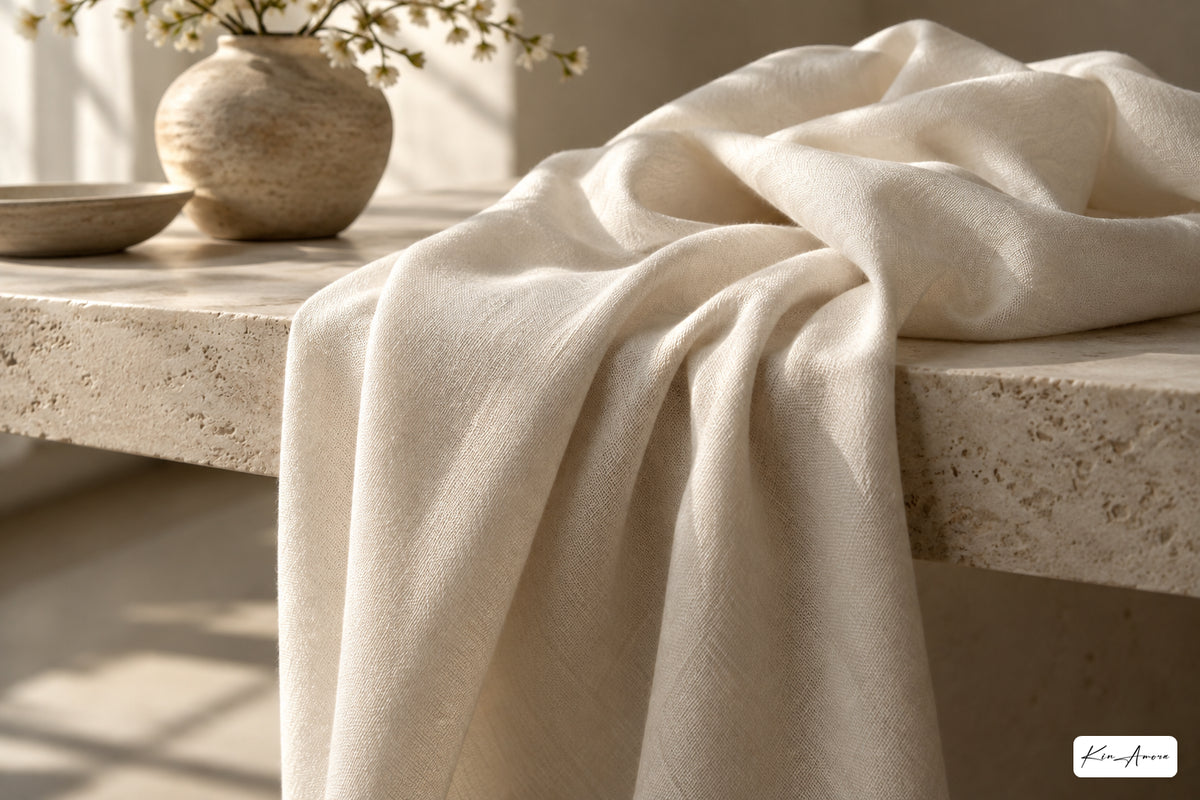
60% cotton 40% rayon feels soft and smooth, with a fluid, swinging weight instead of the crisp body of new cotton. Think of a cotton shirt that has been washed many times, then make it hang more freely. How sheer or substantial a piece feels depends more on its weave and yarn than on the ratio.
Kin Amora's own product pages show that range inside one blend. The Island Pants are described as "gauzy", the Lucia Kimono as "semi-sheer", the Lily Fringe Poncho as "lightweight" and the Casa Top as "breathable". Every one of them is listed as 60% cotton, 40% rayon.
The brand doesn't publish fabric weights. If opacity matters to you, especially on white pieces, ask before you order rather than guessing from the ratio.
Why does a cotton-rayon blend drape so well?
A cotton-rayon blend drapes well because rayon is a softer, more fluid fiber than cotton, so the fabric falls into folds under its own weight instead of holding a shape. Drape is just how fabric hangs when gravity pulls on it. Cotton alone has more body; 40% rayon relaxes it without making it limp.

Rayon is made by dissolving cellulose and then precipitating it back into a fiber, and fiber suppliers rate viscose rayon above cotton for both softness and drape. That's the "soft and drapey" half of its definition.
You see drape most clearly in loose cuts. Harem pants are loose trousers with a dropped crotch, roomy through the hip and thigh, that gather or taper at the ankle, usually on an elastic waistband. In a stiff cotton twill, that extra cloth tends to stand away from the body. In a drapey blend it settles into vertical folds and moves when you walk.
That fall is the quality the brand chose the cloth for. Its story of finding this fabric in Morocco describes the collections as having a "loose and chic drape".
Is cotton-rayon breathable?
Yes, a cotton-rayon blend is breathable. Both fibers are cellulose that takes up water vapor from the air, and rayon takes up more than cotton does. Textile scientists measure this as moisture regain, the water a dry fiber absorbs from the surrounding air. Commonly used textbook values put cotton at 8.5% and viscose rayon at about 13%.
A textile course published by India's NPTEL program (IIT Delhi) works through this exact 60/40 mix and arrives at a regain of about 10.3%. In plain terms, the blend absorbs slightly more water vapor than plain cotton under the same conditions.
Fiber is only half the story, though. Air passes through the gaps between yarns, so an open weave breathes more than a dense one made from the same blend. Read the 60/40 figure as the fiber's side of breathability and the product description as a clue to the airflow side.
Cotton-rayon vs 100% cotton
Choose 100% cotton when you want crispness and the easiest care; choose a cotton-rayon blend when you want softer drape and a more fluid fall. The blend gives up some of cotton's structure and heat tolerance in exchange for movement. Neither fabric wins outright. Each suits a different kind of garment.
| Attribute | 100% cotton | 60/40 cotton-rayon |
|---|---|---|
| Fiber type | Natural seed fiber | Natural cotton plus manufactured regenerated cellulose |
| Moisture regain (textbook values) | 8.5% | About 10.3% (worked example) |
| Hand and drape | More body, holds a shape | Softer, falls into folds |
| Heat sensitivity | Lower | Higher, because of the rayon |
| Label wording | "100% Cotton" | "60% Cotton, 40% Rayon" (or viscose) |
| Suits | Pressed collars, structured shirts, crisp shorts | Gathered, draped and full-volume cuts |
The heat point is the practical catch. Because rayon is more heat-sensitive, a blend asks for gentler laundering than a cotton tee, so follow the care line on each piece and our tips on washing a cotton-rayon blend.
Here's the decision rule. If a garment depends on volume, gathers or a dropped crotch, the blend will hang better than stiff cotton. If it depends on a sharp collar or a pressed crease, pick cotton. Kin Amora's 60/40 cotton-rayon pants are cut for the first case, mostly on elastic waists, in harem, wide-leg, flared and tapered shapes that need the cloth to fall. And if 100% cotton is a firm requirement for you, this blend isn't it.
Shop Related Products
Explore the pieces, colours and sizing on the Kin Amora store.
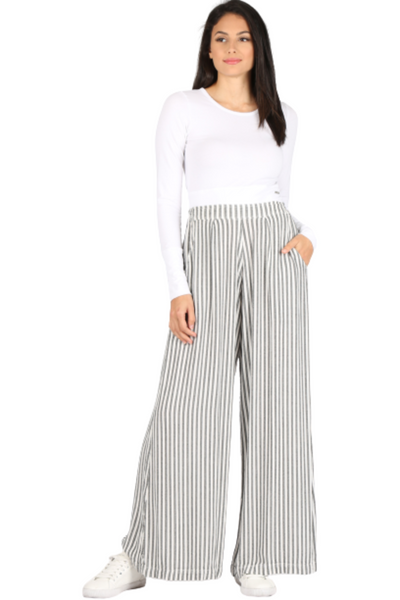
Stella Wide Leg
$165.00 USD
View product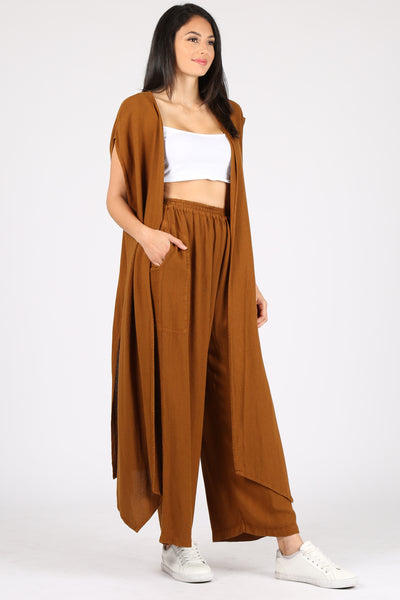
Gypsy Flare Pant
$120.00 USD
View product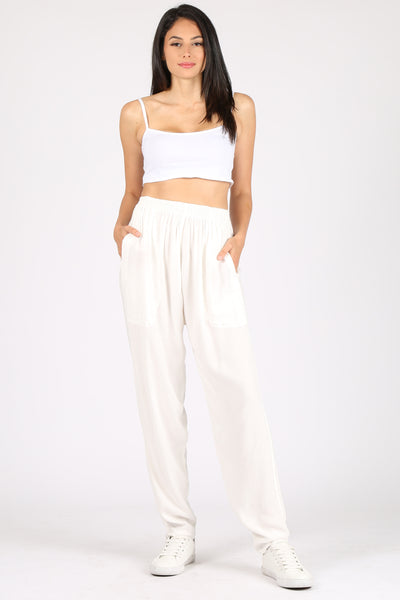
Womens Santorini Pant
$120.00 USD
View productFrequently Asked Questions
Is bamboo fabric the same as rayon?
Usually, yes. The FTC says a product can't be called bamboo unless it is made directly with bamboo fiber. Soft "bamboo" clothing is normally rayon made from bamboo, and the agency notes that no trace of the original plant remains in the finished rayon.
Is lyocell a type of rayon?
Yes, under US rules. 16 CFR 303.7 allows the term lyocell for rayon made from cellulose precipitated from an organic solution, where no chemical intermediates are formed. Kin Amora's product pages list the fiber as rayon.
How long has rayon been around?
Since the late 1800s. Hilaire de Chardonnet patented a nitrocellulose artificial silk in 1885, and Charles Cross and Edward Bevan took out a British patent on the viscose process in 1892.
Is every Kin Amora piece 60/40?
Most clothing pages list 60% cotton, 40% rayon. Some clothing pages, such as a few sets, tops and vests, don't state fiber content, and most belts and bags are leather, so check the description of the specific piece.
Is a cotton-viscose blend the same as a cotton-rayon blend?
Yes, a cotton-viscose blend is a cotton-rayon blend under another name, because the ISO standard uses the name viscose for the predominant form of rayon. The FTC's textile labeling guide notes this, so a European tag reading "viscose" points to the same fiber family. A 60/40 piece can carry the label "60% Cotton, 40% Rayon" or list viscose in place of rayon.