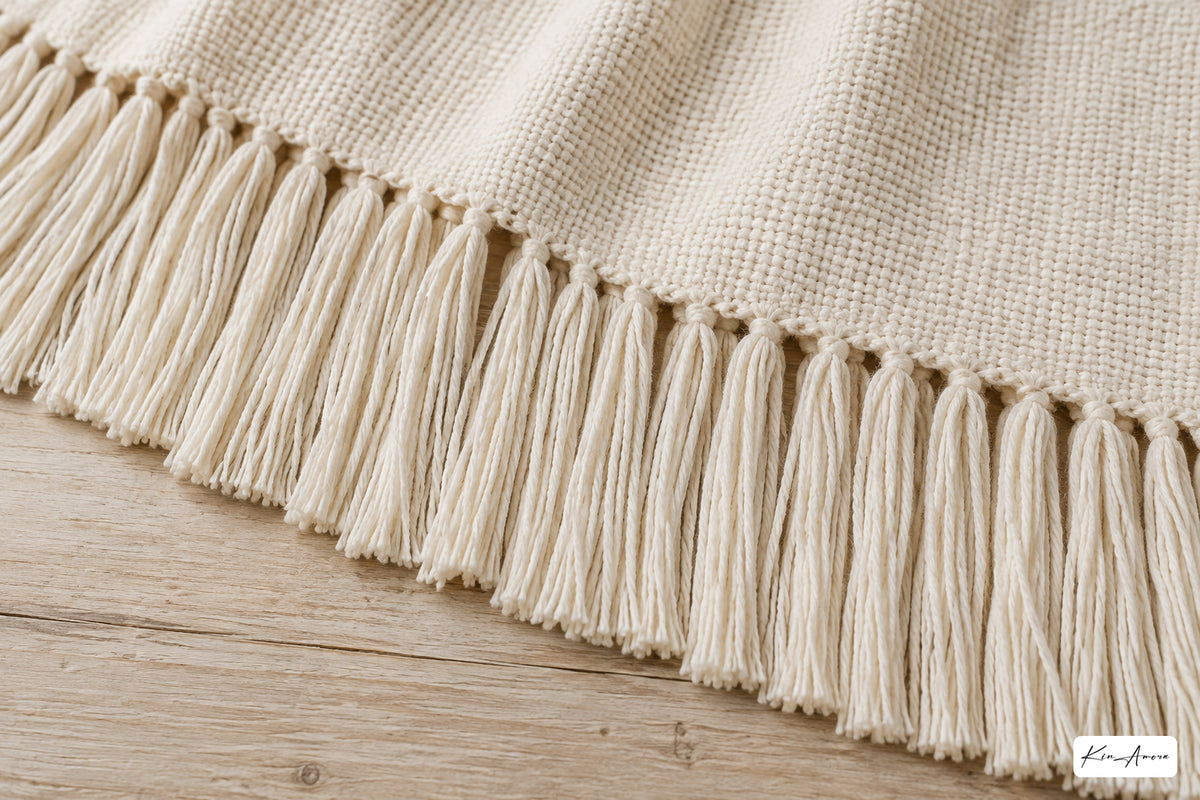

The fabric is the reason for going gently. Kin Amora pieces are made from a 60% cotton, 40% rayon blend and are handmade by local artisans in Morocco. Rayon is a fiber regenerated from plant cellulose, usually wood pulp; it is soft and drapey but more heat-sensitive than cotton. The everyday cotton-rayon wash takes care of the cloth itself; fringe adds dozens of loose strands at the hem.
Can fringe go in the washing machine?
Yes, fringe can go in the washing machine when the care label says machine wash, as long as you bundle and bag the fringe first and run a cold, gentle cycle. Loose strands tangle because a drum flings them around freely. Restrict that movement and a washer treats fringe about as kindly as your hands do.
The FTC's care-label glossary defines a delicate or gentle cycle as "slow agitation and reduced time", and "cold" on a machine-wash label as water up to 86°F (30°C).
Hand wash in cold water instead when a piece has no care line or long hand-knotted fringe. Suede and leather fringe, such as Kin Amora's Velvet Outlaw Belt, is a different material, and its page gives no wash instructions.
What do Kin Amora's fringe pieces list for care?
Of the fringe pieces in Kin Amora's current catalog, only the Cabo Fringe Long Sleeve and the Casa Top list care on their product pages, and both say machine wash cold. The Positano Fringe Dress, Lily Fringe Poncho and Tulum fringe tops list no care line, so treat those with the gentlest method.
| Piece | Fringe as the page describes it | Fabric on the page | Care on the page |
|---|---|---|---|
| Cabo Fringe Long Sleeve ($155) | Fringe trim along the sides and bottom, macramé-style sections | Cotton-rayon blend | Machine wash cold inside out; tumble dry or air-dry; dry clean option |
| Casa Top ($120) | Fringe crossover | 60% cotton, 40% rayon | Machine wash cold, air dry; dry clean friendly |
| Positano Fringe Dress ($220) | Hand-knotted fringe | Not stated ("lightweight, breathable fabric") | Not listed |
| Lily Fringe Poncho ($143) | Not described beyond the name | 60% cotton, 40% rayon | Not listed |
| Tulum Round Neck and V Neck Fringe ($165) | Delicate fringe on sleeves and hem | 60% cotton, 40% rayon | Not listed |
The Positano Fringe Dress needs the most care. Its page describes hand-knotted fringe but states no fiber or wash method, so hand wash it cold. That knotting is handwork, and each knot can work loose if it's yanked while wet.
How do you keep fringe from tangling in the wash?
Keep fringe from tangling by stopping the strands from moving on their own: straighten them, tie them into loose bundles, fold the fringe inside the garment, and wash it in a mesh bag or pillowcase in a small load. Tangles form when free ends twist around each other, so every step below takes away some of that freedom.
- Shake the garment out and finger-comb the fringe straight while it's dry. Any snarl you wash in comes out tighter.
- Gather the strands into bundles about as thick as your finger and tie each one loosely with a scrap of cotton yarn or fabric. Skip rubber bands, which are hard to pull off wet strands.
- Fold the body of the garment over the fringe so the bundles sit in the middle, wrapped in cloth.
- Put the folded piece in a zippered mesh laundry bag, or a pillowcase knotted shut. New Mexico State University's extension service suggests the same mesh-bag-or-pillowcase approach for fragile curtains on a gentle cycle.
- Wash a small load. University of Tennessee Extension's laundry tip sheet puts it plainly: "Clothes need room to move. Fill the tub loosely." Leave out jeans and anything with hooks or zippers.
- Take the bag out as soon as the cycle ends, untie the bundles and lay the piece flat.

Hand washing? Keep the bundles tied and press water through the cloth instead of swishing it around the sink.
How do you untangle fringe?
Untangle fringe from the tips upward, one small section at a time, using your fingers first and a wide-tooth comb only once the strands separate. Pinch each section just below the hem or knot while you work, so the pull never reaches the garment. Starting at the top pushes a tangle down into a tighter clump.
Damp fringe gives way more easily than dry fringe, but it's also at its weakest. Ohio State University Extension's rayon fact sheet notes that regular rayon has low wet strength and may stretch or shrink when wet. On a 60/40 blend, that's the reason to hold the base and never tug.
- Lay the piece flat on a towel and pinch one tangled clump just below the hem.
- Loosen the last inch of the strands with your fingertips, then move up an inch at a time.
- Ease a tight snarl apart with a blunt darning needle or a toothpick. Cut a strand only if it's beyond saving.
- Run a wide-tooth comb through the whole fringe once every section hangs free.
How do you dry a fringe poncho?
Dry a fringe poncho flat. Roll it in a towel and press out the water, lay it on a dry towel or mesh rack, smooth the body and comb the fringe so every strand points the same way. Let it air-dry, turning it once. On a hanger, the wet weight drags on the shoulders and fringe.

The FTC glossary defines "dry flat" as laying the item out horizontally, and "do not wring" as no wringing by hand or roller. Wringing twists each strand into a spiral that dries that way.
The Cabo Fringe Long Sleeve label allows the dryer, but air-drying is the better of its two options for fringe: a tumbling drum re-tangles loose ends, and Ohio State's fact sheet notes that untreated rayon can shrink in machine laundering. The Lily Fringe Poncho lists no care at all, so flat drying is the safe choice.
How do you fix fraying fringe?
Fix fraying fringe by trimming the frayed tips level with sharp scissors and re-tying any knot that has slipped. Then seal the base of loose strands with a small dab of fabric seam sealant, tested first on a hidden spot. Treat only the damaged strands and leave sound ones alone.
The right repair depends on how the fringe was made:
- Cut fringe: trim the fuzzy tips with the piece lying flat, taking off as little as you can. If the stitched line where fringe meets body has broken, a tailor can sew a new one to stop the unraveling.
- Hand-knotted fringe, like the Positano's: re-tie a slipped knot as a snug overhand knot against the hem.
- Macramé-style sections, like the Cabo's: don't cut into the pattern. A tailor can re-knot a broken section.
Dritz's Fray Check instructions describe a clear liquid that stops fraying and secures thread ends, and say it's washable and dry cleanable. Use a very small amount, allow 15 to 30 minutes to dry, and test it first on a hidden seam. It's flammable, so keep it away from heat.
If a fringe piece has a care line, follow it and add the bundle-and-bag step. If it doesn't, hand wash it cold and dry it flat. Either way, never pull on a wet strand.
Shop Related Products
Explore the pieces, colours and sizing on the Kin Amora store.
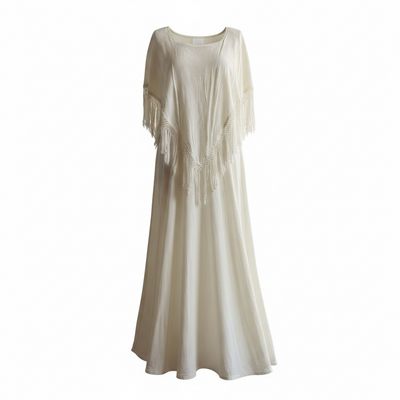
Positano Fringe Dress
$220.00 USD
View product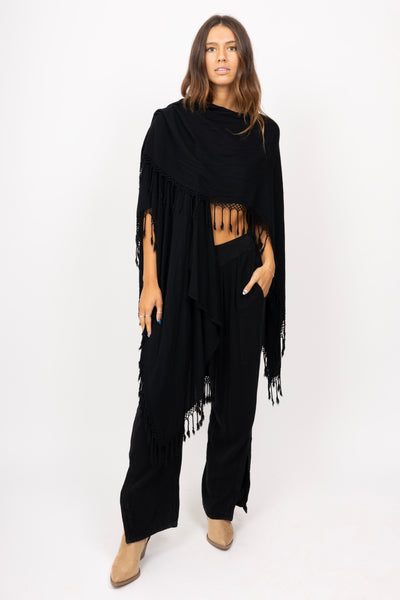
Lily Fringe Poncho
$143.00 USD
View product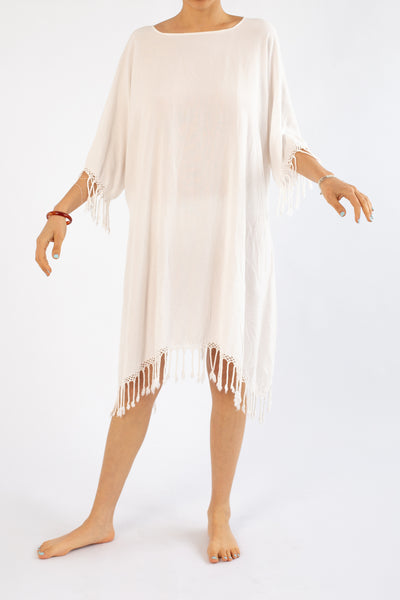
Tulum Round Neck Fringe
$165.00 USD
View productFrequently Asked Questions
Can you dry clean fringe clothing?
Yes, when the label allows it. The Cabo Fringe Long Sleeve lists dry cleaning as an option and the Casa Top calls itself dry clean friendly. Point out hand-knotted fringe to the cleaner.
Can you iron fringe?
Iron only the body, inside out on a low setting. Ohio State's fact sheet says rayon tolerates slightly lower ironing temperatures than cotton. For creases on the road, try these no-iron travel fixes.
Why does fringe look fuzzy after washing?
Fuzz is loose fiber worked up by rubbing. Cotton Incorporated notes that most pills and fuzz form in the wash, where tumbling rubs loose fiber ends out of spun yarns. Our guide to rayon pilling covers how to remove it.
Can you shorten fringe?
Yes. Lay the piece flat, comb the fringe straight and trim it with sharp scissors, measuring from the hem. On hand-knotted fringe, cut only below the knots and leave a tail so they can't slip.
How do you hand wash fringe clothing?
Hand wash fringe clothing in cold water with the fringe tied in loose bundles, and press water through the cloth instead of swishing it around the sink. Hand washing suits pieces with no care line, such as Kin Amora's Positano Fringe Dress, and pieces with long hand-knotted fringe. Afterward, roll the piece in a towel to press out the water and dry it flat.