
Resortwear vs vacation clothes, what's the difference?
Vacation clothes are whatever you pack for a trip, while resortwear is one specific category inside that suitcase, built for heat. A ski jacket, a city blazer and hiking boots are all vacation clothes. Resortwear narrows the field to loose, breathable pieces that pack small and look right on a beach path and at a restaurant table.
The difference matters most when you're buying. A piece that does one job takes up the same suitcase space as a piece that does three, and resortwear is the category built to do several.
| Category | Made for | Typical pieces | Dinner-ready? |
|---|---|---|---|
| Resortwear | Warm-weather travel, day into evening | Loose pants, long dresses, cover-ups that double as dresses, light layers | Yes, that's the point |
| Vacation clothes | Any trip, any climate | Whatever the trip needs, from ski layers to city blazers | Depends on the trip |
| Swimwear and beachwear | Water and sand | Swimsuits, rash guards, sarongs | Rarely, without something over it |
| Loungewear | Rest at home | Sweatpants, robes, soft knits | Not usually |
A four-question test for any piece
Run a piece through these before it goes in the bag.
- Does air move through it? An open weave lets more air through than a dense one, whatever the fiber.
- Is the cut loose? Meredith McQuerry, a Florida State University professor who studies clothing performance, told the Associated Press that in casual settings a looser fit allows more airflow while you stand or sit.
- Can it fold small? If it needs its own garment bag, it isn't resortwear.
- Would it go to dinner? Swap the shoes or add a belt, and the same piece should still work at 8 p.m.
Two or more "no" answers means you're holding vacation clothing, not resortwear.
What are the best fabrics for resortwear?
The best fabrics for resortwear are breathable cellulose-based ones, mainly cotton, linen and blends built on them, in an open weave. In an Associated Press report on fabrics for extreme heat from August 2026, McQuerry said cotton and linen tend to be more breathable, and that open structures without water- or soil-repellent finishes give the most airflow.

That's why the fiber name on a label only settles half the question. A tightly woven linen can trap more heat than a loose cotton gauze, because how the yarn is woven or knitted changes how easily air passes through.
Blends need a closer read. Kin Amora pieces are made from a 60% cotton, 40% rayon blend and are handmade by local artisans in Morocco. The cotton gives the cloth body, and the rayon gives it the drape that lets a long dress swing rather than cling.
Rayon is a fiber regenerated from plant cellulose, usually wood pulp; it is soft and drapey but more heat-sensitive than cotton. US labeling rules in 16 CFR 303.7, the FTC's list of generic fiber names, class rayon as a manufactured fiber composed of regenerated cellulose. So it starts as plant material but isn't a natural fiber in the strict sense.
| Fabric | What it is | In the heat | Trade-off |
|---|---|---|---|
| Cotton | Plant fiber from the cotton boll | Breathable and absorbent | Holds sweat and dries slowly on very humid days |
| Linen | Plant fiber from the flax stalk | Breathable, cool to the touch | Creases easily |
| Rayon | Regenerated cellulose, a manufactured fiber | Light, with a soft drape | More heat-sensitive than cotton |
| 60/40 cotton-rayon | 60% cotton, 40% rayon | Cotton's body with rayon's drape | Not a natural-fiber blend in the strict sense |
| Polyester | Synthetic fiber | Absorbs little moisture unless engineered to wick | Feel varies a lot from one fabric to the next |
If you hate ironing on holiday, pick a drapey cotton blend over pure linen. Linen breathes well, but its creases show after a day in a suitcase, and hotel irons are rarely good ones.
Which pieces are the resortwear essentials?
A working resortwear wardrobe needs six pieces: two relaxed pull-on pants, a full-length dress, a cover-up that can pass as a dress, a loose top and one light layer for cool evenings. Add a swimsuit, flat sandals and a sun hat, and most warm-weather outfits you'll want come from mixing those.
- A gauzy full-length pant. The Island Pant shows the shape well, with side pockets, a slightly gathered ankle, a 24 in (61 cm) inseam and a 33 in (84 cm) total length. Change the shoes and it goes from pool deck to market.
- A harem pant. Harem pants are loose trousers with a dropped crotch, roomy through the hip and thigh, that gather or taper at the ankle, usually on an elastic waistband. The gathered ankle keeps the hem out of wet sand. The Marrakesh Harem Pant adds pockets, which matter more on a trip than at home.
- A full-length dress with pockets. The Mojave Dress has a cold-shoulder neckline, a full-length cut and pockets. Its label lists machine wash cold and tumble dry low, which suits a trip with a hotel laundry.
- A cover-up that passes as a dress. The Tulum V Neck Fringe is sold to be worn as a dress, a cover-up or a separate top, which makes it an easy beach-to-dinner outfit.
- A loose top. The Lisbon Top is a longer-sleeved take on a T-shirt with a pointed V neckline, roomy enough to wear over a swimsuit or half-tucked into either pant. Bought as a top-and-pant set, it also splits into separates.
- A light layer. The Lily Fringe Poncho is lightweight and works as a shawl or a beach cover-up, which also makes it the answer to an over-air-conditioned restaurant.
On travel days, wear the bulkiest of these on the plane; our guide to long-haul flight outfits covers cabin layers in detail. Treat these six as the shortlist: our resort capsule wardrobe builds them into a 12-piece list for a 7-day warm-weather trip. Heading to Morocco itself? Our guide to what to wear in Morocco adjusts these pieces for local customs in cities, on beaches and at mosques. Every piece above comes from our range of artisan resortwear made in Morocco.
Can you wear resortwear at home?
Yes, resortwear works at home, because the loose cut and breathable fabric that suit a hot trip suit a humid July weekend just as well. A piece that looks finished also means you can answer the door, or walk to the café for coffee, without changing first. Plenty of resortwear gets more wear on the sofa than on vacation.

Dressing up relaxed clothes at home isn't new. The ASU FIDM Museum's history of 1930s lounge pajamas notes that Vogue, in June 1931, reported women wearing pajamas to fairly formal dinners in their own houses.
Kin Amora designs its pieces for traveling, meditating, lounging or exploring, and the brand's motto says it plainly: "If you can travel with it, you can do anything with it."
The limit is temperature. A 60/40 dress on its own won't keep you warm in a drafty house in January, so wear a sweater over it or save it for the warm months.
Where did resortwear come from?
Resortwear took shape in the late 1920s, when pajamas moved out of the bedroom and onto the beaches of the French Riviera as swimsuit cover-ups. The ASU FIDM Museum says resort then became a fifth fashion "season" beside fall/winter and spring/summer, though it described a relaxed state of mind more than a time of year.
Fabric was part of the code from the start. According to the same museum, silk satin signaled nightwear, while beach and lounging pajamas used plainer cloth such as silk shantung, linen or cotton. By the 1930s, one-piece jumpsuit-style versions had appeared, and as the trend spread, lower-priced versions came in rayon, the same regenerated fiber found in today's cotton-rayon blends.
Which resortwear piece should you buy first?
Buy the cover-up that passes as a dress first, because it works over a swimsuit at noon and on its own at dinner. Choose it in a breathable cellulose fabric with room to move, then add the pants and the light layer once you know how you really travel. US orders of $150 and over ship free.
Shop Related Products
Explore the pieces, colours and sizing on the Kin Amora store.
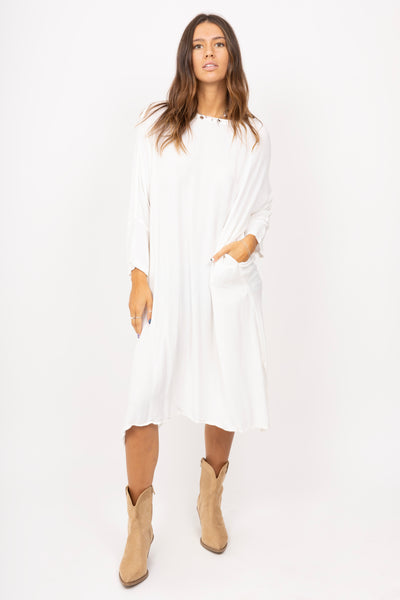
Goddess Gown
$145.00 USD
View product
Bahia Kimono
$170.00 USD
View product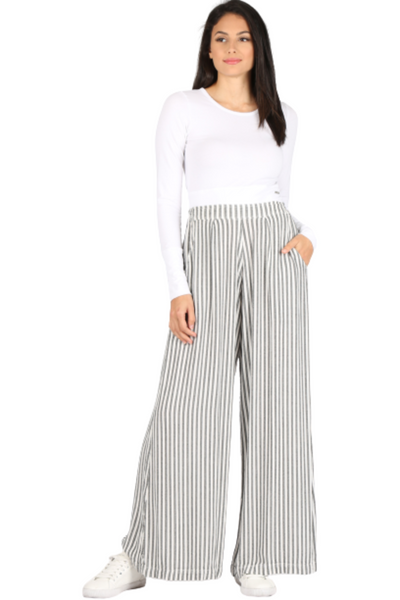
Stella Wide Leg
$165.00 USD
View productFrequently Asked Questions
What is a resort or cruise collection?
A resort or cruise collection is an extra line that fashion houses release between their main fall/winter and spring/summer collections. The name comes from wealthy customers' winter trips to warm places, and it stuck even though most buyers now wear the pieces wherever they live.
Is resortwear only for women?
No. Men's resortwear follows the same rules: loose pants, airy tunics and light layers in a breathable fabric. Our men's line includes the Marrakesh Harem, the Aztec Pant and the Gypsy Flare.
What colors work best for resortwear?
Lighter colors are the practical pick in strong sun. University of Chicago assistant professor Po-Chun Hsu told the Associated Press that white, pale or reflective fabrics can cut heat gain because they bounce sunlight away.
How much does resortwear cost?
Prices vary widely by brand and fabric. Most of our single pieces cost $98 to $165, and most sets run $145 to $310.
Is resortwear the same as loungewear?
No, resortwear isn't the same as loungewear, because loungewear is made for rest at home, while resortwear is made for warm-weather travel, day into evening. Loungewear covers pieces such as sweatpants, robes and soft knits that aren't usually dinner-ready. Resortwear works at home too, because its loose cut and breathable fabric suit a humid July weekend.