Do women need to cover up in Morocco?
Women visiting Morocco don't need to cover their hair, but covering shoulders, chest and knees is the respectful norm in cities, villages and near mosques. The UK Foreign Office's Morocco travel advice suggests loose-fitting clothes over the arms, legs and chest, and notes that women may get unwanted attention, especially when traveling alone.
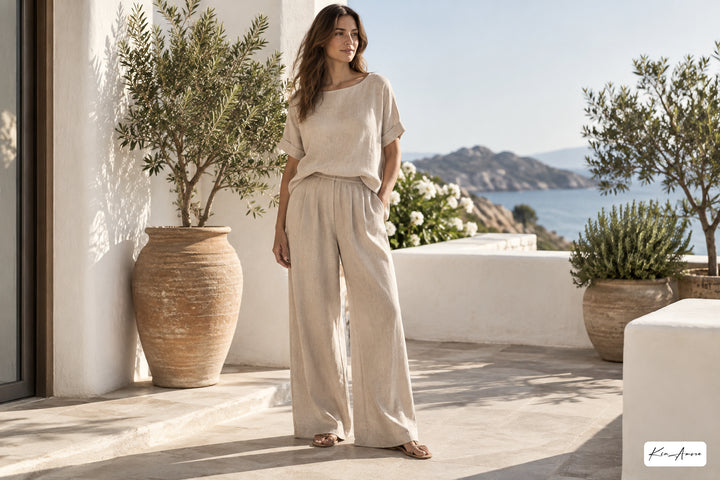
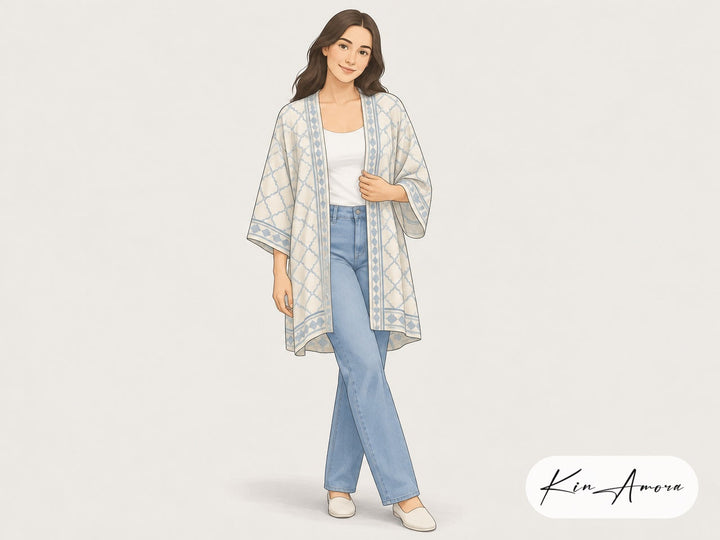
Loose is the word doing the work in that advice. A flowing maxi skirt and skinny jeans cover the same skin, but the skirt reads as relaxed and stays cooler in a crowded souk. Color and print are fine, so there's no need to pack a bag of beige.
That's why the clothes that suit Morocco overlap so much with resortwear. Resortwear is relaxed, breathable clothing made for warm-weather travel that can move from daytime to evening. Our resortwear guide makes a useful filter here, as long as you favor the longer, sleeved versions.
What should you wear in medinas, rural areas and beach towns?
Match coverage to the setting: shoulders and knees covered in medinas and villages, swimwear only on the beach, and the most coverage at religious sites. The coast is also cooler. Agadir's average August high is 80.6°F (27.0°C), per 1991-2020 normals from Morocco's national weather service on the World Meteorological Organization's climate service.
| Setting | Women | Men | Why it matters |
|---|---|---|---|
| Medinas (Marrakech, Fes) | Long loose pants or a maxi skirt, a top that covers the shoulders, a light layer | Lightweight long pants, a T-shirt | Busy residential lanes with mosques on many corners |
| Rural villages and the Atlas | Your most covered outfit, sleeves to the elbow or longer | Long pants and a shirt with sleeves | Local dress tends to be more traditional away from the cities |
| Beach towns (Agadir, Essaouira) | Swimwear on the sand, a cover-up for walking into town | Swim shorts on the sand, a shirt in town | Beach norms stop at the promenade |
| Religious sites | Below the knee, sleeved, a scarf in your bag | Long pants and sleeves | The Hassan II Mosque's written dress code |

The rural row is the one travelers underestimate. A day trip from Marrakech into the Atlas puts you in villages where nobody is dressed for a pool, so wear the long pants that morning rather than carrying them.
What to wear in Marrakech in summer?
In a Marrakech summer, wear loose, long, light-colored layers in a breathable fabric, because long sleeves and hems keep direct sun off your skin and loose, light cloth helps you stay cool. The city's 1991-2020 climate normals put the average July high at 99.9°F (37.7°C), and nights stay warm, with an average July low of 69.1°F (20.6°C).
Fabric decides whether long sleeves feel good or awful. Kin Amora pieces are made from a 60% cotton, 40% rayon blend and are handmade by local artisans in Morocco. Rayon is a fiber regenerated from plant cellulose, usually wood pulp; it is soft and drapey but more heat-sensitive than cotton. That drape lets the cloth hang away from your body instead of sticking to it, which is what you want at 3 p.m. in Jemaa el-Fna.
Harem pants are loose trousers with a dropped crotch, roomy through the hip and thigh, that gather or taper at the ankle, usually on an elastic waistband. The gathered ankle earns its place in the medina, where a long straight hem drags through dust.
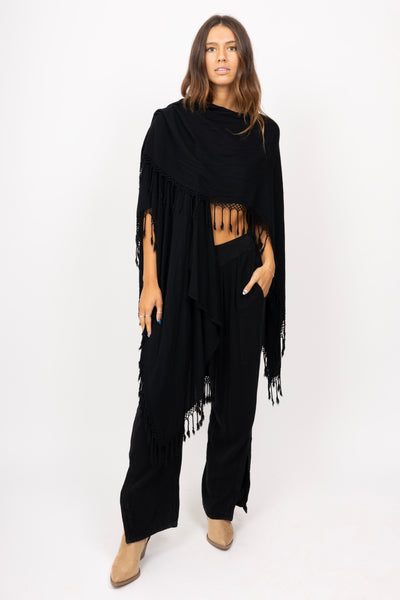
For your shoulders, a tank top in the riad becomes street-ready with one light layer. Our Lily Fringe Poncho is a lightweight piece that works as a shawl or a beach cover-up ($143, in black or white), so it covers you in the souk and on the Essaouira sand.
What to wear to visit a mosque in Morocco?
Most mosques in Morocco admit Muslims only, so for most travelers the mosque question means one building, the Hassan II Mosque in Casablanca, which visitors enter on a paid guided tour. Its official visitor rules require clothes that cover the shoulders and torso and fall below the knee, and call shorts and sleeveless clothes "absolutely forbidden".
The point about access is worth taking seriously. Morocco World News notes that non-Muslims can't enter Moroccan mosques, with two exceptions: Hassan II and the mosque at Tinmel in the High Atlas, which was badly damaged in the 2023 earthquake. Naturally Morocco, a UK tour operator, also names Hassan II as the notable exception. Elsewhere, admire the doorways from the street and don't step inside.
The Fondation de la Mosquée Hassan II sets the practical details:
- Tickets for foreign adults cost 140 dirhams (MAD); children under 6 go free.
- From September 16 to March 14, tours run Saturday to Thursday at 9, 10 and 11 a.m., noon and 3 p.m., with fewer slots on Friday. From March 15 to September 15, a 4 p.m. tour is added. Ramadan has its own timetable.
- You take your shoes off at the entrance and carry them for the whole tour, in bags handed out at the door.
- Video cameras and sound devices aren't allowed, and groups are asked to stay silent.
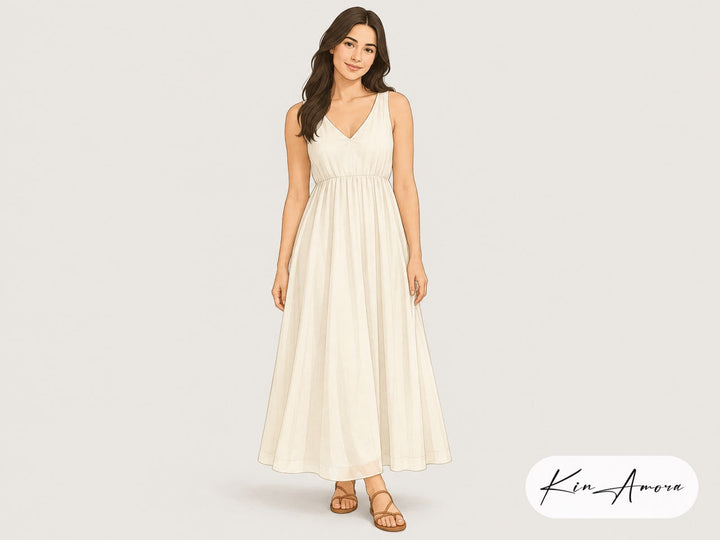
The foundation's rules don't mention covering your hair. A light scarf weighs nothing, though, so women should carry one in case a guide asks. Wear slip-on shoes, and choose a sleeved maxi dress or loose pants with a long-sleeved top.
Can you wear shorts in Morocco?
Yes, on the beach, by the pool and inside your riad, but in medinas, villages and near mosques, long pants or a skirt below the knee fit in far better, for men and women alike. Naturally Morocco's advice is to wear clothing that doesn't reveal much, except on the beach and where you're staying.
Men sometimes assume the dress norms are only for women. They aren't. The Hassan II Mosque's shorts ban applies to every visitor, and lightweight long pants keep the sun off your legs too. Our men's line includes the Marrakesh Harem for exactly this kind of trip.
What will you see Moroccans wearing?
You'll see jeans and sneakers next to the hooded djellaba, often on the same street, because everyday Moroccan dress mixes Western clothes with traditional garments. Some women wear headscarves and some don't. Religious holidays such as Eid bring out more traditional dress.
If you'd like to put names to what you see, our Moroccan garment glossary explains each one, from the djellaba to the sarouel. And if a beautifully dressed stranger catches your eye, ask before taking a photo, which the Foreign Office also advises.
So what should you pack for Morocco?
Pack for the medina rather than the beach: two pairs of loose long pants, a sleeved maxi dress or long skirt, three tops with sleeves, a light layer, a scarf and comfortable closed shoes. That covers mosques, villages and the hottest afternoons, and swimwear is the easy extra. US orders of $150 and over ship free.

Shop Related Products
Explore the pieces, colours and sizing on the Kin Amora store.
Lily Fringe Poncho
$143.00 USD
View product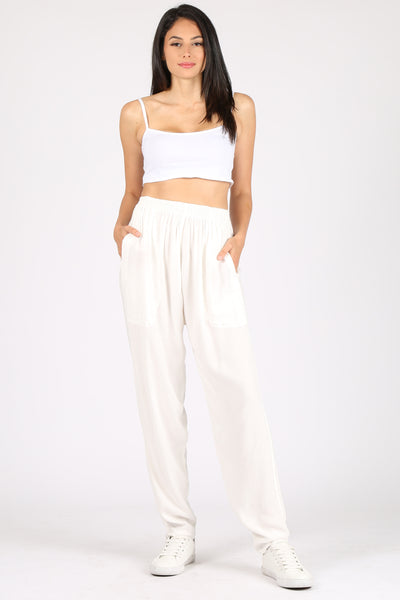
Womens Santorini Pant
$120.00 USD
View product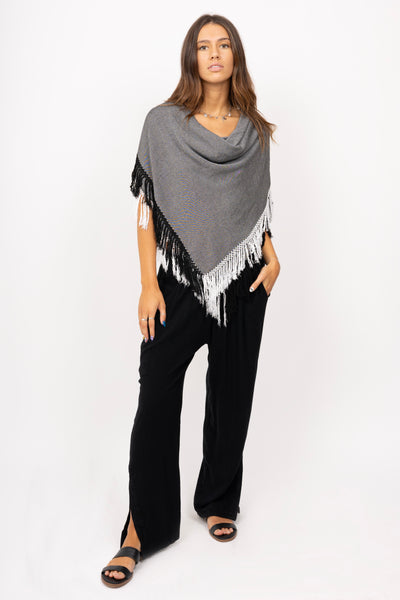
Puglia Scarf
$65.00 USD
View productFrequently Asked Questions
What should you wear in Morocco during Ramadan?
Dress a notch more covered than usual. The UK Foreign Office says clothing that doesn't meet local dress codes may cause more offense during Ramadan, which next begins in February 2027. Avoid eating, drinking or smoking in public in daylight, too.
What should you wear in the desert near Ouarzazate?
Layers, because the range is wide. Ouarzazate's 1991-2020 normals give an average July high of 101.8°F (38.8°C) but an average January low of 35.2°F (1.8°C), so a winter trip needs a warm jacket on top of sun-covering clothes.
What shoes work best in Moroccan medinas?
Closed-toe flats or sturdy sandals with grip. Medina lanes are uneven and often dusty, and you'll walk more than you expect. Break them in at home, not on day one in Fes.
Can you wear leggings in Morocco?
Yes, under a tunic or dress that covers your hips. On their own, leggings are about as revealing as shorts in a medina, so treat them as a base layer rather than an outfit.
Can you wear a tank top in Morocco?
Yes, you can wear a tank top in Morocco inside your riad, and one light layer over your shoulders makes it street-ready. Covering shoulders, chest and knees is the respectful norm in cities, villages and near mosques. A lightweight shawl or poncho, such as Kin Amora's Lily Fringe Poncho, covers you in the souk. The Hassan II Mosque's visitor rules forbid sleeveless clothes outright.